
Review · PRIVATE LUXURY TOURS
12 Days Private Luxury Sightseeing Tour in Morocco
Morocco rewards a well-planned route. This 12-day private tour links Casablanca, Meknes, Fes, the Atlas Mountains, Merzouga, Marrakech, Essaouira, and El Jadida without asking you to arrange each transfer yourself. You travel in an air-conditioned private vehicle, stay in five-star accommodation, and spend one night in a luxury nomad tent in the Sahara.
I like the private format, since your group can adjust the pace and spend more time at places that catch your interest. I also like the mix of grand monuments, old medinas, mountain villages, desert scenery, and Atlantic coast. The main consideration is the pace: you cover a lot of Morocco in 12 days, and some driving days are long.
This trip suits you best if you want comfort and structure rather than independent rail travel and hotel hunting. Entrance fees, lunches, drinks, most dinners, flights, and several popular attractions cost extra, so the advertised price is not the complete trip budget.
Key points to know before booking
- A full Morocco route: You visit Casablanca, Meknes, Fes, Ifrane, the Sahara, the Todra Gorge, Ouarzazate, Ait Benhaddou, Marrakech, Essaouira, and El Jadida.
- A private vehicle and permanent guide: Your own group travels together, with air conditioning and airport transfers included.
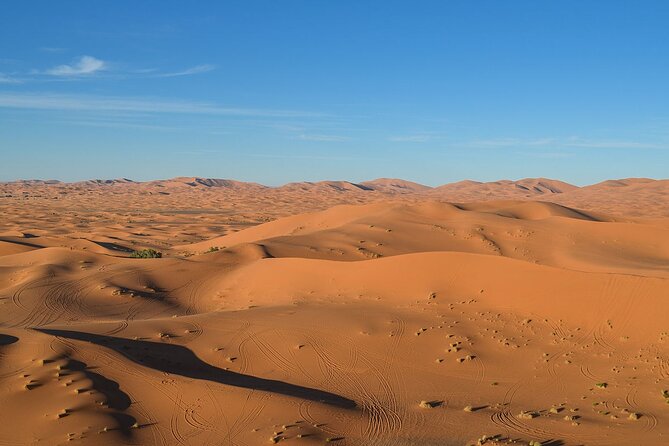
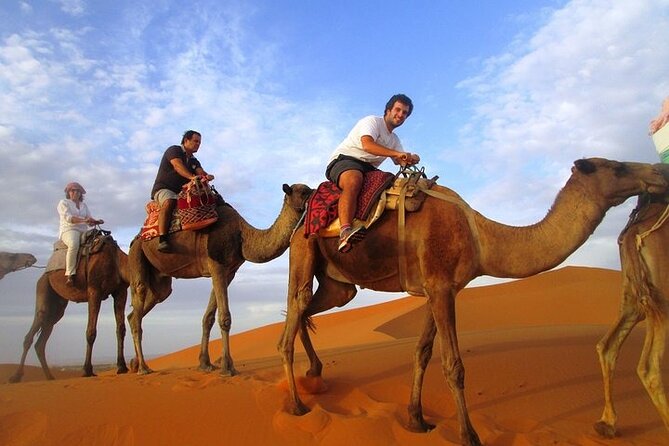
- One night in the Sahara: The package includes a camel ride, sunset in the Merzouga dunes, and a luxury nomad tent.
- Five-star lodging: Accommodation includes breakfast for 11 mornings, with a desert camp replacing one standard hotel night.
- Several historic sites cost extra: The Hassan II Mosque, Bahia Palace, Majorelle Garden, Ben Youssef Madrasa, and other monuments are not included.
- A strong record of service: Past praise focuses on careful planning, responsive staff, excellent drivers, and guides such as Radouan, Momo, Hassan, Youssef, and Jamal.
What the $4,548 price covers
At $4,548.23 per person, this is a serious investment. The value comes from combining private transport, airport pickup and drop-off, five-star accommodation, breakfasts, three dinners, a full-time guide, and the work of arranging a complicated cross-country route.
I would compare this price with the cost of booking 11 nights of upscale lodging, a private driver for the whole route, desert transfers, local guides, and airport transport separately. The package removes a great deal of planning and avoids the headache of piecing together the Sahara section, where independent arrangements can become awkward.
Still, budget carefully. The listed price does not include lunches, drinks, snacks, most dinners, flights, or entry fees. If you visit every attraction with a stated fee, those charges add up to about €78 per person. The Hassan II Mosque costs €13, Jardin Majorelle €15, the Yves Saint Laurent Museum €13, Bahia Palace €7, and the remaining listed sites carry smaller fees.
That structure gives you some control. You can decide which museums and palaces matter most to you instead of paying one large blanket admission charge. It also means you should keep cash or a payment method ready for optional sightseeing.
More Private Luxury Tours in Morocco
- luxury 4 Hour Private Tour of Tangier
★ 5.0 · 455 reviews - Luxury private day trip – Atlas Mountains, Agafay Desert & camels
★ 5.0 · 102 reviews - FES TO Chefchaouen Day Trip- luxury Private Tour
★ 5.0 · 49 reviews
Casablanca begins with architecture and cinema
Your arrival day starts with airport pickup in Casablanca. The timing and even the starting or ending point can be adjusted, which is useful if your flight schedule does not fit a standard morning arrival.
The first major stop is the Hassan II Mosque, built beside the Atlantic. Non-Muslims can visit this mosque with a guide, making it one of the most important chances on the route to learn about Moroccan religious traditions and the building’s design. Allow about two hours, and remember that admission is extra.
Dinner at Rick’s Café is another optional highlight. It is not the actual restaurant from the film Casablanca, but it recreates the mood with arches, balconies, a piano bar, brass lighting, and a courtyard setting near the old medina walls. Reservations are required, so arrange this before arrival if it appeals to you.
Meknes and Fes bring imperial Morocco to life
Day two combines wine country with the monuments of Meknes. The vineyards near Meknes are described as Morocco’s only controlled denomination of origin wine region. You can spend time at a farmhouse, sample local wines, and have lunch or a picnic while taking in the countryside.
This is an unusual addition to a Morocco itinerary, though it will not suit every group. If wine is not a priority, the afternoon can focus more heavily on Meknes. Dar Jamai Museum occupies an old palace and presents Moroccan art, including jewelry, pottery, painting, and tapestry. The museum, a former religious school, and the grand Bab Mansour Gate give the city real variety.
The Mausoleum of Moulay Ismail has a decorated courtyard with mosaics, fountains, carved cedar, marble, and Meknes carpets. Non-Muslims cannot enter the room containing the sultan’s remains, but the surrounding architecture is still worth seeing.
You then continue to Fes for a panoramic view over the city. The day packs in several stops before arrival, so do not expect a slow, leisurely Meknes visit.
Fes needs a full day on foot
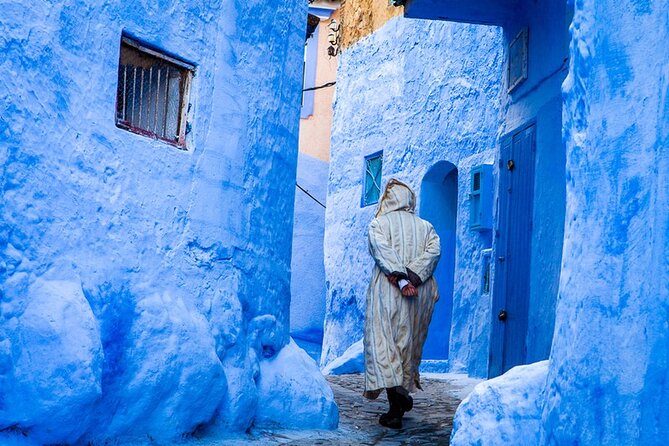
Fes is one of the strongest parts of the itinerary. The old medina is a maze of more than 9,000 streets, and a dedicated local guide helps you make sense of it. You visit important palaces, the Jewish quarter, religious schools, and historic lanes that are difficult to understand without local direction.
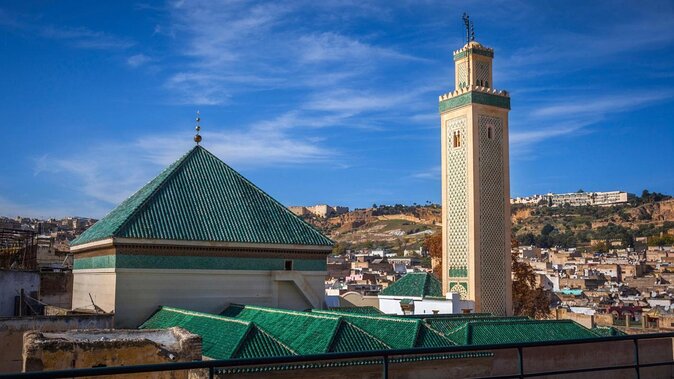
The Chouara Tannery is a memorable stop. From above, you can see the colored dye pools and the traditional leather work below. Shops near the tannery can charge higher prices, so treat the stop as a chance to observe the craft, not an obligation to buy.
The Al-Attarine Madrasa is a fine example of medieval Moorish decoration, with detailed tilework and a carefully preserved interior. Bou Inania Madrasa adds another historic school to the day. Admission to both is extra.
You can look into the Karaouine Mosque from outside, but non-Muslims cannot enter. This is a good example of why a local guide matters: even when a building is not open to you, its place in the city and surrounding madrasas can still make sense.
One caution: the quality of local guiding can vary. The strongest overall praise for this company centers on tour managers and drivers, while some feedback specifically found city guides too quiet or light on explanation. If Fes matters greatly to you, ask in advance for a particularly strong history-focused guide.
Same place, a different kind of splurge:
- Majestic Desert: 3-Day Luxury Journey from Marrakech to Fes
★ 4.9 · 1,437 reviews - From Marrakech: 3-Day Desert with luxury camp, camel & meals
★ 4.6 · 922 reviews - Marrakech: 3-Day Desert Trip to Merzouga with Luxury Camp
★ 4.7 · 887 reviews - From Fes: 2-Day Merzouga Desert Trip w/Luxury Tent & Dinner
★ 4.7 · 844 reviews
The Middle Atlas changes the scenery
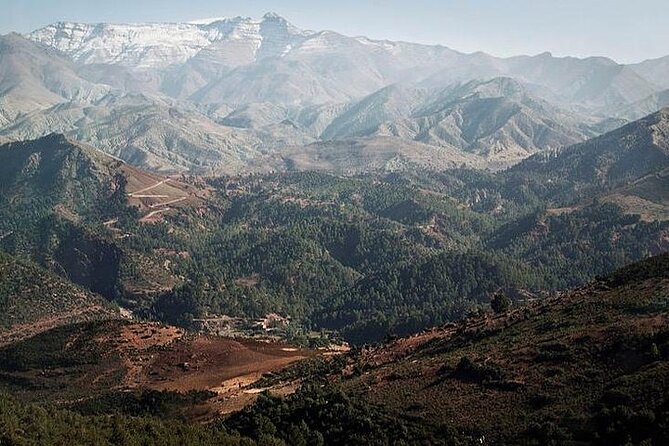
The route leaves the old cities for Ifrane, Azrou, and the Middle Atlas. The cedars, springs, waterfalls, traditional Berber villages, and mountain air offer a welcome change after several intense medina visits.
There may also be a stop at a farm producing homemade cheese and organic honey. This kind of visit gives you a closer look at rural food traditions than another palace would, although the information provided does not specify the exact farm or tasting schedule.
Day four is listed as about five hours in this area. Conditions can change with the season, especially in the mountains, so keep your plans flexible. The route is attractive because it shows Morocco as more than imperial cities and desert dunes.
Across the Ziz Valley to a night in Merzouga
Day five takes you through Midelt and Erfoud toward the Sahara. Midelt is a brief mountain stop, while Erfoud sits near fossil excavations. Fossils found in the area help explain that the Sahara region was once covered by an ancient ocean.
The Ziz Valley provides one of the route’s broadest views, with palms and fertile ground cutting through the dry surroundings. You then reach Merzouga, where tea welcomes you before the desert activities begin.
The included camel ride lasts about an hour and takes you into the dunes toward sunset. The late afternoon light is particularly good for photographs, but remember that the desert can be cold after dark and in the early morning. You sleep in a luxury nomad tent, an important part of the trip’s appeal and one reason this is more than a standard city tour.
Quad bikes and other desert challenges are mentioned as optional activities. Confirm their price and schedule before committing, since they are not listed among the included benefits.
The desert night is likely to be the emotional centerpiece of the journey. You get a strong change of pace: tea, open sand, a camel ride, sunset, and a night beneath the stars. It is also the point where comfort matters most, and the luxury camp helps soften the rougher edges of desert travel.
Gorges, roses, palms, and the road of kasbahs
After sunrise, the route moves from sand to rock. The Todra Gorge has towering cliffs reaching about 600 meters and a narrow passage in places. Two hours here gives you time to see the scale of the walls without turning the stop into a full hiking day.
The Dadès Valley follows, with green farmland and villages contrasting sharply with the desert. Near Kalaat Mgouna, known as the City of Roses, the air and local products reflect the rose-growing valley. Skoura then adds a large palm oasis and an overnight stay in a more peaceful setting.
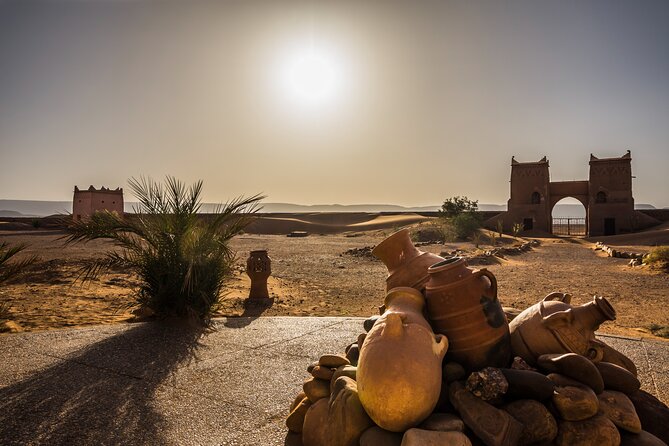
Day seven follows the Route of the One Thousand Kasbahs toward Ouarzazate. In Ouarzazate, you can see the Taourirt Kasbah and old fortifications. The city and surrounding area are closely linked to film production, but the architecture matters even if you do not recognize the movie locations.
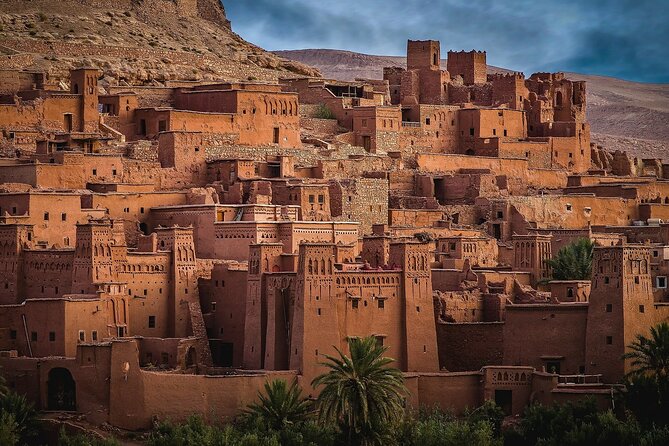
Ait Benhaddou is the major stop. This UNESCO World Heritage site is a fortified settlement on the old trade route between the Sahara and Marrakech. It remains inhabited and has appeared in productions including Gladiator and Game of Thrones. The two-hour visit should allow time to walk through the earthen buildings and take in the setting.
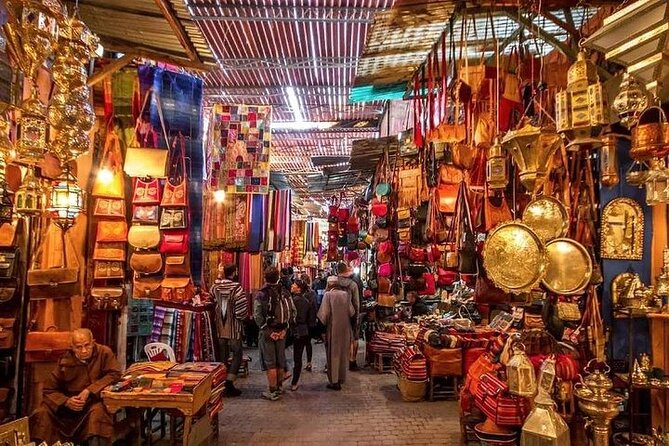
The day ends in Marrakech at Jemaa el-Fna. Food stalls, tea, music, and street performances create a noisy, sensory introduction to the Red City. You can eat Moroccan staples such as tagine and couscous at local prices, but take a moment to check prices before ordering, since stall practices vary.
Two very different days in Marrakech
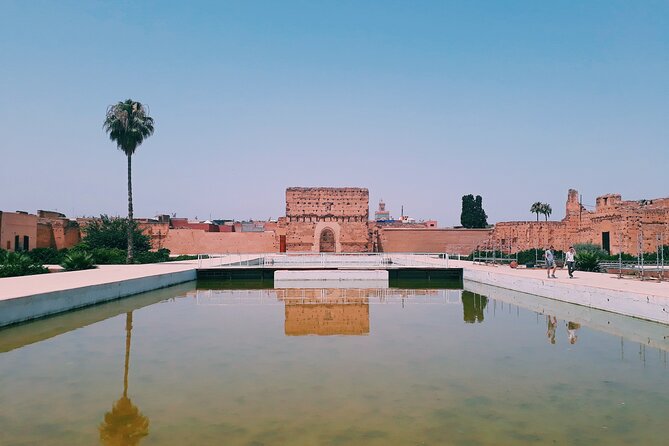
Day eight is the main guided sightseeing day in Marrakech. The Bahia Palace offers decorated rooms, gardens, and courtyards built in the 19th century. Ben Youssef Madrasa shows a different style of craftsmanship, with an ornate interior and a long religious and educational role.
The Koutoubia Mosque is best viewed from outside. Its minaret is the city’s most recognizable landmark and influenced later towers, including Seville’s Giralda and Rabat’s Hassan Tower.
Majorelle Garden is a calmer stop after the medina. Exotic plants, strong blue paint, and carefully designed paths make it popular, so admission should be planned in advance if possible. The Yves Saint Laurent Museum sits nearby and combines fashion displays with modern architecture shaped by Moroccan design.
Most of these attractions cost extra. The day can feel full, especially once you add the medina, palace, garden, and museum, so tell your guide if you prefer fewer stops and more time in one place.
Day nine is described as a free Marrakech day, yet it also lists the Saadian Tombs, Menara Gardens, Almoravid Koubba, and Dar El Bacha Museum. Treat it as a flexible day rather than a completely empty one. You can select the sights that interest you, shop in the souks, or arrange a hot-air-balloon ride over the city and palm grove, with advance booking required.
The Saadian Tombs and Almoravid Koubba are especially useful for seeing earlier periods of Marrakech. Dar El Bacha adds a palace setting and a café serving coffees from around the world. Menara Gardens provide open space away from the narrow medina lanes.
Essaouira adds sea air and a slower rhythm
Day ten heads to Essaouira for art, seafood, argan oil, and Atlantic air. The city’s medina has a different feel from Fes and Marrakech, with maritime influences and a long connection to trade and music.
Fresh fish and argan oil are central to the local food experience. The day is listed at about six hours, so you have time to explore without treating the city as a quick photo stop. You can also appreciate the connection to figures such as Jimi Hendrix and Orson Welles, who helped give Essaouira its artistic reputation.
Day eleven begins with a relaxed morning at the beach before the trip turns north toward El Jadida. This former Portuguese port is a UNESCO World Heritage site, known especially for its Manueline cistern, built in 1514. The chapel of St. Sebastian and the restored facade of the Church of Our Lady of the Assumption add more Portuguese influence.
The long drive back toward Casablanca makes this a practical final touring day, but it may feel less restful than the schedule suggests. If you want a slow beach morning, confirm how much time remains for the transfer.
Who will enjoy this private Moroccan route?
I would choose this tour if you want to see a lot of Morocco in one trip and prefer having transport, hotels, guides, and desert arrangements handled together. It is especially suitable for families, couples, and groups of friends who value privacy and want the freedom to adjust the pace.
The tour is also a good fit if you want comfortable lodging without giving up the country’s more memorable experiences. The private vehicle matters on the long stretches between Fes, Merzouga, Ouarzazate, Marrakech, and the coast.
I would hesitate if you prefer slow travel. The itinerary moves often, and several days combine long drives with multiple visits. Independent travelers who enjoy choosing inexpensive lodging, local buses, and their own restaurants could spend less, though they would take on much more work.
The company’s staff have earned especially warm praise for planning and personal care. Alexandra is repeatedly singled out for patient communication and help shaping itineraries, while guides and drivers including Radouan, Momo, Hassan, Youssef, Jamal, Moustapha, Issa, and Abdel are praised for kindness, driving, language skills, and attentiveness. Use that strength: tell the company your preferred pace, interests, and language needs before you go.
Should you book this Morocco tour?
Book it if you want a polished first visit with private transport, upscale accommodation, and the major Moroccan sights in one carefully linked route. The Sahara camp, Ait Benhaddou, Fes, and the contrast between the Atlas Mountains and Essaouira give the trip real range.
Skip it if the $4,548 price leaves little room for meals, admissions, and optional activities, or if you would rather spend several days in one city. Before paying, ask for the exact hotel names, confirm the local guide arrangements in Fes and Marrakech, and clarify how the flexible Marrakech day will work.
For the right group, this is a comfortable way to see Morocco’s big sights while still reaching places that are difficult to arrange alone.
FAQ
How long is the tour?
The tour lasts approximately 12 days, beginning in Casablanca and ending with a transfer to Casablanca Mohammed V International Airport.
Is the tour private?
Yes. Only your own group participates, and the itinerary can be adjusted to your group’s pace.
Is airport pickup included?
Yes. Airport pickup and drop-off are included for Casablanca.
What type of transport is provided?
Transport is provided in a private, air-conditioned vehicle with a permanent guide.
Are hotels included?
Yes. The package includes five-star accommodation with breakfast, plus one night in a luxury nomad tent at the desert camp.
Is the camel ride included?
Yes. A camel ride in the Merzouga Desert is included.
How many breakfasts and dinners are included?
The package includes 11 breakfasts and three dinners. Lunches, drinks, snacks, and other dinners are not included.
Are entrance fees included?
No. Several entrance fees are extra, including the Hassan II Mosque, Dar Jamai Museum, Al-Attarine Madrasa, Bou Inania Madrasa, Ben Youssef Madrasa, Bahia Palace, Jardin Majorelle, the Yves Saint Laurent Museum, Saadian Tombs, Almoravid Koubba, and Dar El Bacha.
Can the tour be canceled for a refund?
Yes. You can cancel at least 24 hours before the experience start time for a full refund. Poor weather or failure to meet the minimum number of travelers can also lead to a different date or a full refund.
Just added around Morocco
- VIP TOUR OF FES- Medina by local guide & Rempart by car-FULL Day★ 5.0 · 74 reviews
- 2 Day Desert Tour from Fez with Camel ride Overnight luxury Camp★ 4.5 · 24 reviews
- Private 2 Days Desert Tour from Fes with Overnight in Luxury Desert Camp★ 5.0 · 6 reviews
- Private VIP excursion to Tangier via Chefchaouen from Fez★ 5.0 · 11 reviews
- Luxury Overnight From Fez To Merzouga★ 5.0 · 65 reviews
- luxury 3 Days 2 Nights Desert Tour from Fez to Marrakesh★ 4.5 · 73 reviews
- Private Luxury Transfer From Fes to Tangier via Chefchaouen★ 5.0 · 12 reviews
- Fes to Fes Private Desert tour 1-night 2-Day Tour luxury camps★ 5.0 · 23 reviews
Private Luxury Tours, compared.

Arrival Transfer: Private Luxury 8 Passenger Limousine Service
Read our review →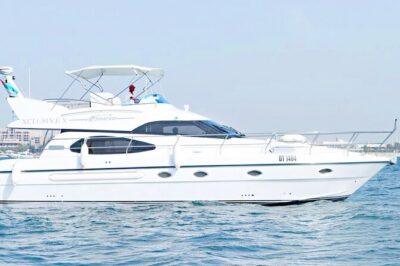
Dubai 3 Hour Private Luxury Yacht Charter with Jet Ski Option
Read our review →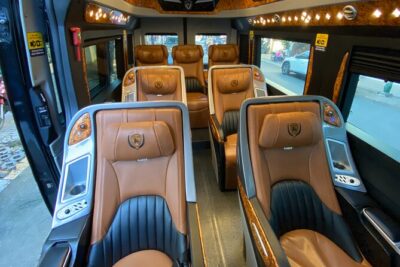
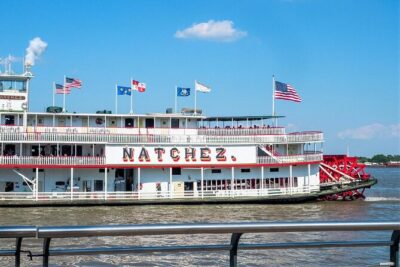
VIP Jazz Dinner Cruise with Private Tour and Open Bar Option
Read our review →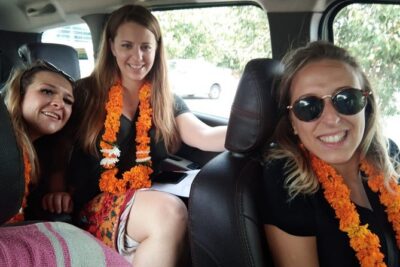
Four-Day Private Luxury Golden Triangle Tour to Agra and Jaipur From New Delhi
Read our review →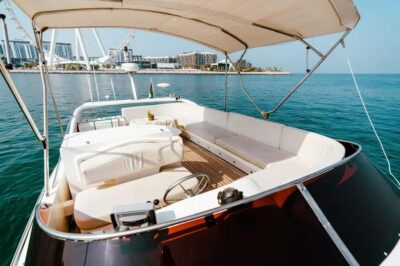
Browse the lists this tour appears in