
Review · PRIVATE LUXURY TOURS
Private Luxury Biblical Tour: Apostle Paul’s Footsteps – Corinth
Paul’s Corinth is still easy to picture. This private half-day trip from Athens connects the Corinth Canal, ancient ports, Roman ruins, and the places tied to Apostle Paul’s mission. I like the relaxed door-to-door transport and the freedom to explore at your own pace. I also like that the tour reaches Kenchreai and Acrocorinth, not only the main archaeological site.
The main consideration is that your driver is not a licensed guide inside the archaeological areas. Entrance fees are also extra, about €20 per person, and the five to six hours include all driving time. Still, an English-speaking driver-guide can provide helpful historical and biblical context along the way.
You get a private car or minivan, bottled water, onboard Wi-Fi, and pickup from a hotel, apartment, or selected port. The tour costs $179.06 per person, which makes the value strongest for couples, families, or small groups who want personal transport rather than a large coach.
Key points to know before you book
- Paul’s Corinth in one compact outing: See Kenchreai, the Roman Forum, Paul’s Bema, the museum, and the church dedicated to Apostle Paul.
- Private transport from Athens: Groups of one to four use a luxury sedan, while groups of five to seven travel by minivan.
- The Corinth Canal starts the story: You get a short stop at the famous waterway before moving into older layers of Corinthian history.
- Acrocorinth adds a dramatic finish: The fortified hill gives you wide views and evidence of Greek, Byzantine, Frankish, and Ottoman rule.
- Flexible pacing is a major benefit: Drivers such as Demetrios, Makis, George, and Pericles have been praised for patience, conversation, photos, and useful local stops.
- Budget for admissions: The advertised price does not include archaeological site and museum tickets, listed at about €20 per person.
From Athens to the Corinth Canal
The day begins with pickup at your hotel, apartment, or selected cruise port. At the port, the driver meets you in the arrival area with a sign showing your name. For hotel and apartment pickup, the driver waits outside.
This arrangement is especially useful if you are staying in Athens for only a short time or arriving by ship at Piraeus. One couple appreciated being collected at Piraeus and dropped at a different location in Athens, so it is worth asking about a similar arrangement when booking. The standard activity ends back at the original meeting point, but the operator has shown flexibility in individual cases.
The drive is part of the experience. You are not simply being delivered to one ruin, then sent back. The route follows the approach to the Peloponnese and builds a story around Corinth’s position between mainland Greece and the southern peninsula.
Your vehicle is air-conditioned and includes Wi-Fi and bottled water. Groups of one to four use a sedan, while groups of five to seven use a minivan. That makes this a good choice for a family or a group of friends who want to talk together, leave bags in the vehicle, and avoid coordinating with strangers.
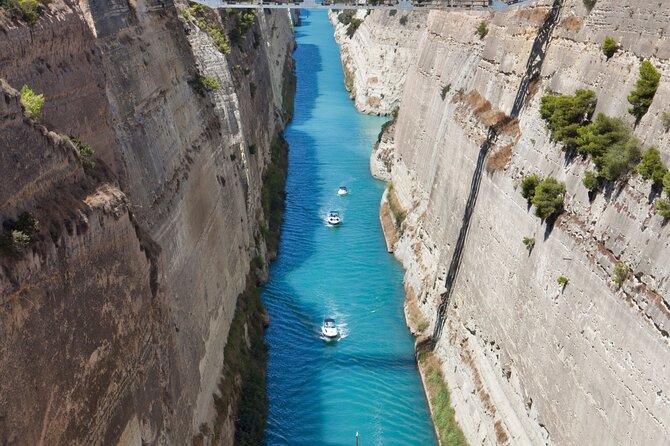
The first stop is the Isthmus of Corinth, where the Peloponnese meets mainland Greece. The Corinth Canal cuts through the narrow strip of land below you. The canal is a 19th-century engineering project, but the location mattered long before modern construction.
You have about 20 minutes here. That is enough for views, photographs, and a quick explanation of why Corinth became so important. It is not a long walk or a full canal excursion. Think of it as a scenic orientation stop, not a boat trip.
More Private Luxury Tours in Athens
- Half Day Best Of Athens Highlights Luxury Private Tour 4Hou
★ 4.7 · 210 reviews - Private Luxury Biblical Tour: Apostle Paul in Athens & Corinth
★ 5.0 · 162 reviews - Athens AirPort To Athens Hotels Luxury Private Transfer Service
★ 4.5 · 161 reviews
The Diolkos and Corinth’s old shortcut
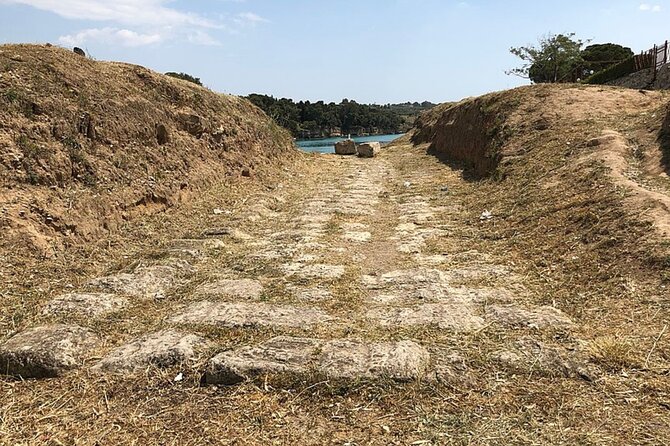
A short stop at the Diolkos brings you back to the ancient world. This paved route was used to move ships overland across the isthmus. Before the modern canal, this shortcut helped vessels avoid sailing around the southern tip of the Peloponnese.
You have about 10 minutes at the site. That is brief, but the stop works well because it gives meaning to the geography. Corinth was not important by accident. Its position allowed people, cargo, and ships to pass between two bodies of water.
I would pay close attention here even though the visit is short. The Diolkos explains the commercial power behind ancient Corinth better than a simple list of dates. It also makes the later Roman port stops easier to understand.
Kenchreai, the port where Paul arrived
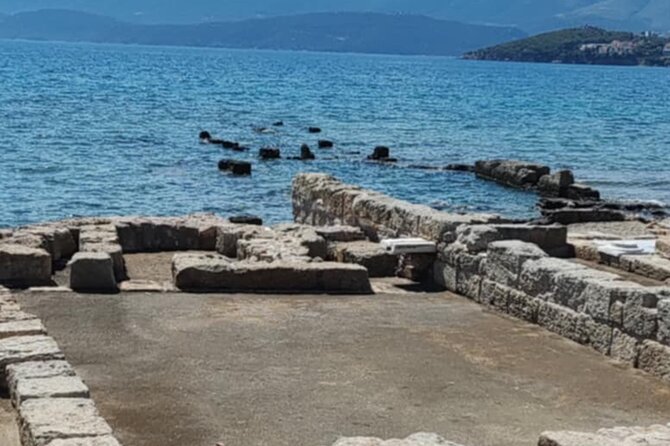
The route continues to Ancient Port of Kenchreai, on the eastern side of the isthmus. This was Corinth’s eastern port and an important commercial center during the Roman period.
The site is linked with Paul’s arrival in 53 A.D. That connection gives the stop special meaning for anyone following the New Testament account. You can also see remains associated with Roman harbor facilities, temples, and early Christian structures.
The visit lasts about 20 minutes. Do not expect a fully reconstructed port city. What you get is a quieter archaeological stop where the setting helps you picture Corinth as a place connected to the wider Roman world.
Kenchreai is one of the tour’s best choices because many day trips focus only on the canal and Ancient Corinth. Seeing the port adds a physical sense of Paul’s route. The religious story begins to sit within a real network of ships, merchants, officials, and roads.
Ancient Corinth and the Glauke Fountain
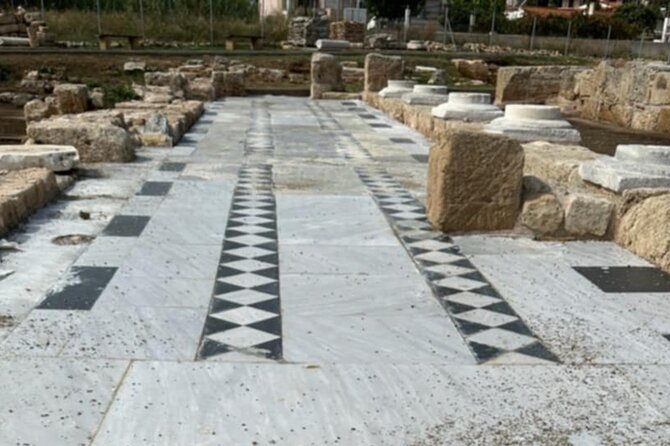
The main archaeological portion takes place at Ancient Corinth, also called Archaia Korinthos. The ruins bring together Greek mythology, Roman government, early Christianity, and daily life in a major ancient city.
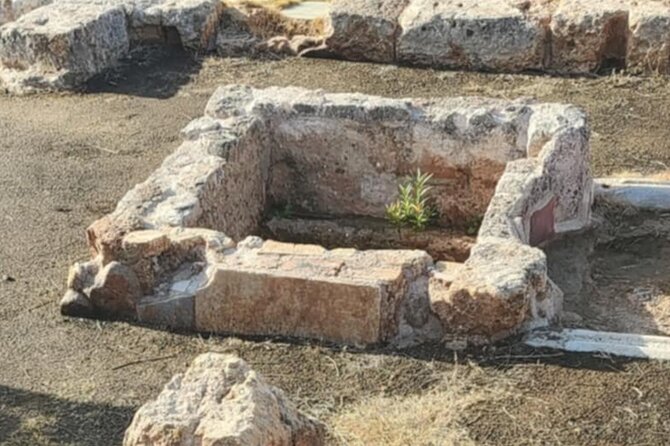
The Glauke Fountain is carved into the hillside. Its story comes from Greek myth. Glauke, daughter of King Creon, is said to have sought refuge here after being poisoned by Medea.
You have about 25 minutes for this portion of the site, including the area around the Roman Forum and Paul’s Column. The timing is enough for a guided explanation and photographs, though not for a slow, detailed study of every ruin.
The Bema, or raised platform in the Roman Forum, is the key biblical site. According to the account in Acts, Paul was brought before Gallio, the Roman proconsul, around 51 A.D. The charge concerned his religious teaching, but Gallio dismissed the case.
That moment matters because it shows how Roman law affected the spread of Christianity. Paul was not operating outside public life. He was teaching in a city governed by Roman officials, surrounded by older pagan traditions and commercial activity.
The Bema later became connected with Christian worship. Modern mosaics showing Paul’s trial and journey add a more recent layer to the ruins. Some visitors may find these additions meaningful, while others may prefer the older stones and original archaeological remains.
More Private Luxury Tours in Greece
- Athens Private Luxury Catamaran Cruise with Traditional Greek Meal and BBQ
★ 5.0 · 106 reviews - Private Luxury Tour: Athens Acropolis & Iconic City Highlights
★ 5.0 · 48 reviews - Private Luxury Tour: Unveiling the Sacred Mysteries of Eleusis
★ 5.0 · 45 reviews - Mycenae Epidaurus Nafplio Isthmus Canal Private Luxury Tour
★ 5.0 · 43 reviews
The Temple of Apollo and Corinth’s older world
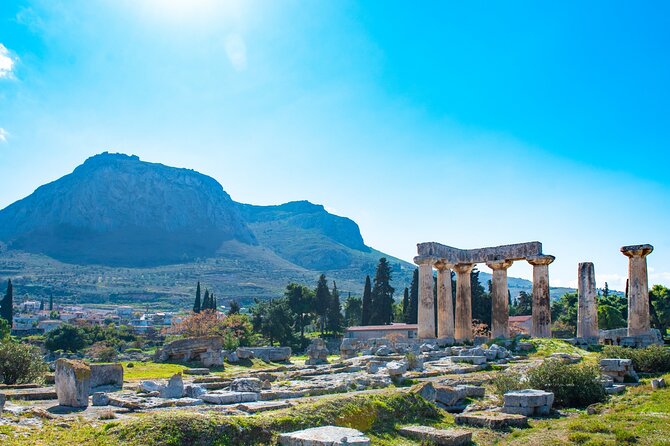
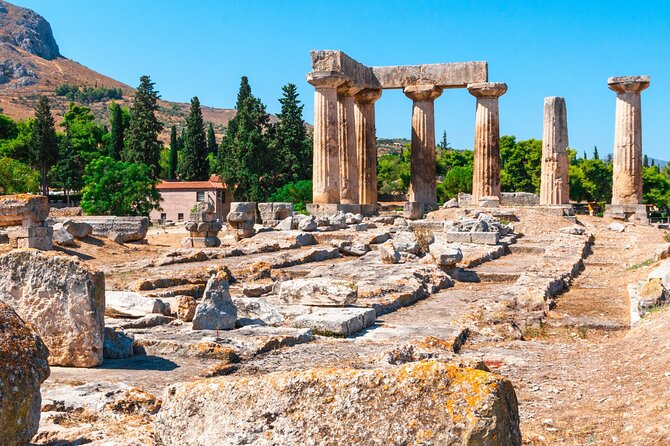
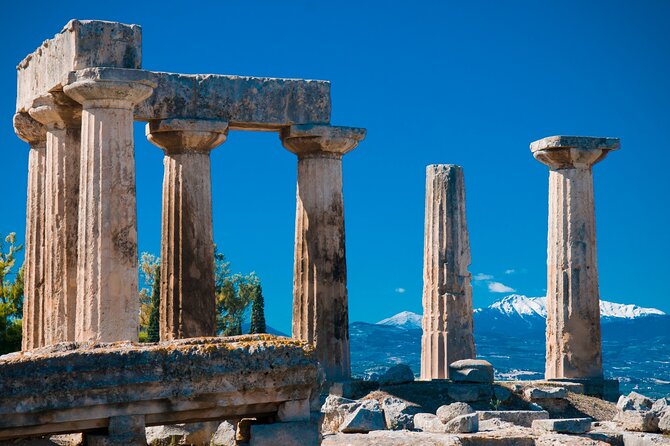
The Temple of Apollo helps set Paul’s mission against the religious world he encountered. It is one of the oldest Doric temples in the Peloponnese, with columns that still give a strong sense of the city’s former scale.
You have about 20 minutes here. The stop is not only about architecture. It shows that Corinth was already an established religious and political center long before Paul arrived.
The tour also includes another short visit connected with the Bema of Apostle Paul, listed at about 10 minutes. This platform served as a public speaking area and tribunal during Roman rule. Governors used it to issue judgments, and tradition connects it with Paul’s appearance before Gallio.
Because the Bema and the Roman Forum are closely related, your driver may explain them together during the main Ancient Corinth stop and then return to the biblical detail separately. That repetition can be useful if you want the scripture and Roman legal setting explained clearly. If you prefer a more archaeological focus, ask for extra detail about the forum, temples, and city plan.
One important practical point: admission to Ancient Corinth and the Temple of Apollo is not included. The total site and museum fees are listed at about €20 per person. Bring comfortable shoes because the ground is uneven and you will be walking between ruins.
The Archaeological Museum of Corinth
The Archaeological Museum of Corinth gives you a more organized look at the area. Its collection covers periods from prehistoric times through the Roman era.
You can expect statues, pottery, and objects connected with the Sanctuary of Asklepios. After seeing scattered columns and foundations outside, the museum helps put smaller finds into context.
The planned visit lasts about 45 minutes, making it one of the longer stops. That is useful if you enjoy artifacts, but it also means the day is not just a succession of quick photo stops. If museums are not your priority, tell your driver how you would like to divide your time.
The museum is another place where the lack of a licensed guide may matter. Your English-speaking driver can explain the historical setting, but you will not have a specialist guiding you through every display inside. For many people, the private format and flexible pacing will make up for that limitation. If detailed museum interpretation is your top goal, you may want to arrange a licensed guide separately.
Acrocorinth, the best view of the day
The road then climbs toward Acrocorinth, the fortified ancient acropolis above Corinth. This is one of the most memorable parts of the outing because the setting makes the city’s strategic value obvious.
The hill contains layers from classical Greece, Byzantium, the Franks, and the Ottoman period. You are not seeing only one ancient monument. You are seeing a fortress that remained useful because of its position.
The planned stop lasts about 40 minutes. That gives you time for views and some exploration, but not an unlimited hike through every section of the fortifications. Wear sturdy shoes, especially if you want to walk beyond the easiest paths.
Acrocorinth can be physically more demanding than the canal or museum. The tour is suitable for most people, but the combination of warm weather, sun, uneven ground, and uphill walking deserves attention. Bring a hat, sunscreen, and water. Bottled water is provided, but you should still prepare for a sunny Greek day.
I like this stop because it changes the pace. After biblical sites and museum displays, you get open views and a sense of Corinth as a defended city. The fortifications also show why this location remained important for centuries after Paul’s time.
Apostle Paul Church and the final reflection
The final stop is Apostolos Pavlos Church, a three-aisled basilica built in 1936 on the site of an earlier church linked with Apostle Paul.
This is a modern place of worship, not an ancient ruin. That difference is worth noting. The church represents the continuing religious memory of Paul’s time in Corinth and gives the tour a quieter closing point after the archaeological sites.
You have about 20 minutes here. The stop may appeal most to visitors making a pilgrimage or following Paul’s missionary journeys. If your interest is strictly classical archaeology, it may feel less essential than the museum or Acrocorinth.
What the private format adds
The strongest part of this experience is the private setting. You travel only with your own group, so you can ask questions without holding up a coach full of people. The driver can also adjust the pace within the limits of a five to six-hour outing.
The guides and drivers named in the feedback include Demetrios, Dimitrios, Makis, George, and Pericles. Their praised qualities are practical ones: patience, friendly conversation, biblical knowledge, historical explanation, help with photographs, and a relaxed pace.
George’s background as a Greek Orthodox Christian was especially useful for one group following the biblical side of the tour. Demetrios was praised for keeping people supplied with water and explaining each stop clearly. Dimitrios offered photos, allowed extra time at the canal, and even made an ice cream stop.
These details matter because a private driver-guide can shape the day. You are not guaranteed a particular driver unless arranged in advance, but the operating pattern suggests a service built around personal attention rather than a fixed script.
There is also room for a proper meal or local stop, although lunch is not listed as an inclusion. One couple especially enjoyed the restaurant their driver selected. Treat that as a possible bonus, not part of the guaranteed package, and plan your food budget separately.
Is $179.06 per person good value?
At $179.06 per person, the price is not the cheapest way to reach Corinth. The value depends heavily on your group size and pickup needs.
For one or two people, the cost is easier to justify if you want hotel or cruise-port pickup, private transport, Wi-Fi, bottled water, and a driver who can adapt the day. For five to seven people sharing a minivan, the price becomes more attractive because you are paying for a private vehicle and service rather than buying separate transport.
Remember to add about €20 per person for archaeological and museum admission. Tips are not included. Airport pickup costs extra as well.
The tour lasts five to six hours, but that includes travel between Athens and the Corinth area. You should not expect six full hours inside the ruins. The benefit is that the route covers several places that would be difficult to connect comfortably by public transport in one half-day.
Who should book this Corinth tour?
I would recommend it most strongly to:
- Couples and families who want a private day without a large group
- Cruise passengers with a limited stop in Athens
- Visitors interested in Paul’s missionary journeys and the New Testament
- People who want both biblical sites and classical archaeology
- Small groups that value hotel or port pickup
- Anyone who prefers a flexible driver-guide to a fixed group schedule
You may want another option if you need a licensed archaeological guide inside every site, want a slow full-day exploration, or have difficulty with uneven ground and uphill walking. The itinerary moves at a good pace, but it is still a sightseeing day with several outdoor stops.
The tour requires decent weather. If poor weather causes cancellation, you are offered another date or a full refund. You can cancel for a full refund up to 24 hours before the start time, but late cancellations and changes are not accepted.
Should you book it?
Book this tour if Paul’s connection to Corinth is central to your trip and you want to see the wider setting around it. The Bema, Kenchreai, the Roman Forum, the church, and Acrocorinth create a fuller picture than a quick visit to the main ruins alone.
The private transport, patient drivers, and flexible pacing are the biggest reasons to choose it. Just budget for admissions, wear good shoes, and be clear about whether you want more biblical explanation, museum time, or hilltop views.
For a small group arriving through Athens or Piraeus, this is a practical and meaningful way to reach Corinth without arranging several pieces yourself.
FAQ
How long does the Corinth tour last?
The experience lasts approximately five to six hours, including the driving time between Athens and the Corinth-area stops.
Where does pickup take place?
Pickup is available from designated hotels, apartments, and selected cruise ports. At a port, the driver meets you in the arrival area with a sign showing your name.
Is airport pickup included?
No. Airport pickup is available for an additional cost.
Is the tour private?
Yes. Only your own group participates in the activity.
What type of vehicle is used?
Groups of one to four people travel in a luxury sedan. Groups of five to seven use a comfortable minivan.
Are entrance fees included?
No. Archaeological site and museum admissions are listed at about €20 per person and are paid separately.
Is there a licensed guide at the archaeological sites?
No. The tour includes an English-speaking driver-guide, but a licensed guide to accompany you inside the archaeological sites is not included.
What should I bring?
Wear comfortable footwear and bring a hat and sunscreen. Bottled water is provided, and the vehicle has Wi-Fi.
Just added around Athens
- Discover Lefkes: Traditional Greek Village Paros VIP Experience★ 4.0 · 5 reviews
- Private Athens Transfer Airport/Port -Greek Tours-Hourly service★ 5.0 · 88 reviews
- VIP – Day Cruise From Athens to Hydra Poros Aegina★ 4.5 · 28 reviews
- VIP Private Guided Tour of Athens Acropolis & Plaka in a Sidecar★ 5.0 · 108 reviews
- Visit Delphi & Meteora Monasteries Luxury Private Tour FromAthens★ 5.0 · 9 reviews
- Private Luxury Transfers in Athens, Piraeus Port & Athens Airport★ 4.5 · 24 reviews
- Private Luxury Transfer from Athens to Athens Airport★ 5.0 · 25 reviews
- VIP Day Cruise from Athens to Hydra, Poros and Aegina★ 4.5 · 58 reviews
Private Luxury Tours, compared.


Arrival Transfer: Private Luxury 8 Passenger Limousine Service
Read our review →
Dubai 3 Hour Private Luxury Yacht Charter with Jet Ski Option
Read our review →
VIP Jazz Dinner Cruise with Private Tour and Open Bar Option
Read our review →
Four-Day Private Luxury Golden Triangle Tour to Agra and Jaipur From New Delhi
Read our review →
Browse the lists this tour appears in