
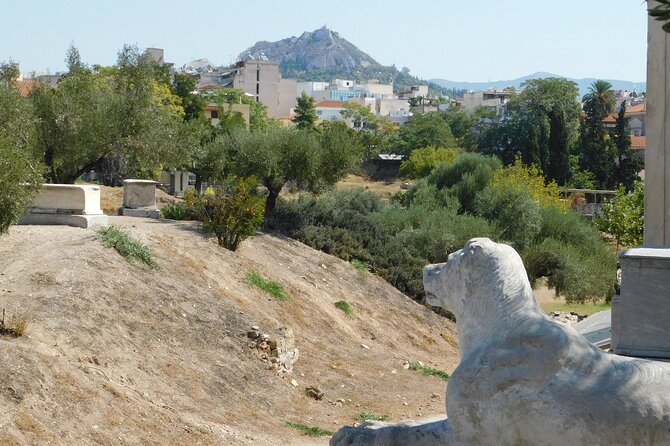
Review · PRIVATE LUXURY TOURS
Private Luxury Tour: Mystic Pilgrimage – Kerameikos to Eleusis
Ancient Athens does not end at the Acropolis. This private half-day outing follows the Sacred Way from Kerameikos to Eleusis, linking cemetery walls, Byzantine mosaics, old bridges, and the sanctuary where the Eleusinian Mysteries took place. I like the relaxed private transport and the way the route connects separate sites into one story. I also like the personal touch of guides such as Pericles and Dimitris, whose storytelling has earned especially warm praise. The main catch is clear: this is a driver-guide experience, not a licensed guide-led tour inside every archaeological site, and admission fees are extra.
At about $129, the value depends on your group size. For two people, it is a fairly expensive way to reach Eleusis, but for four to seven people, private transport, hotel or port pickup, bottled water, WiFi, and a flexible pace make the price easier to justify. You should also know that the schedule is ambitious. Fifteen stops in five to six hours means some visits are brief, and the major Eleusis site deserves more time if ancient religion is your main interest.
Key points at a glance
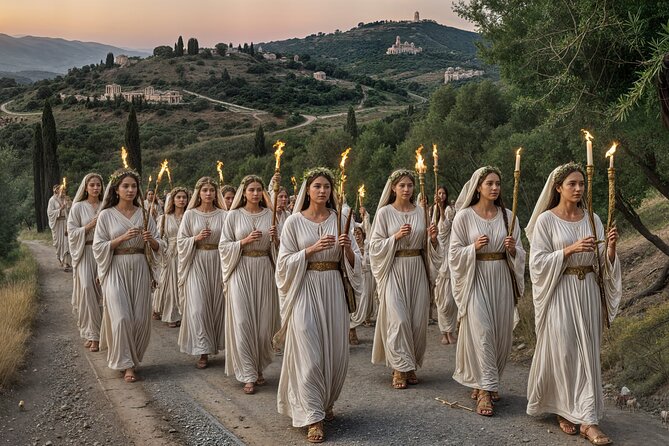
- The Sacred Way links the whole day: You follow the ancient route from Kerameikos, through western Athens, to Eleusis rather than visiting disconnected ruins.
- Kerameikos gives the tour a strong beginning: Ancient tombs, city walls, the Dipylon Gate, and the Panathenaic route make this more than a simple cemetery visit.
- Eleusis is the main event: The Great Propylaea, Kallichoron Well, Ploutonion, Telesterion, and museum bring mythology and archaeology together.
- Your driver-guide shapes the experience: Pericles, Periklis, and Dimitris are singled out for humor, warmth, historical detail, and engaging stories.
- It is private and comfortable: Groups of one to four ride in a sedan, while groups of five to seven use a minivan with air conditioning, bottled water, WiFi, and private transport.
- Budget for tickets and lunch: Archaeological admission, museum entry, and the meal in Eleusis are not included.
Why the Sacred Way makes this tour different
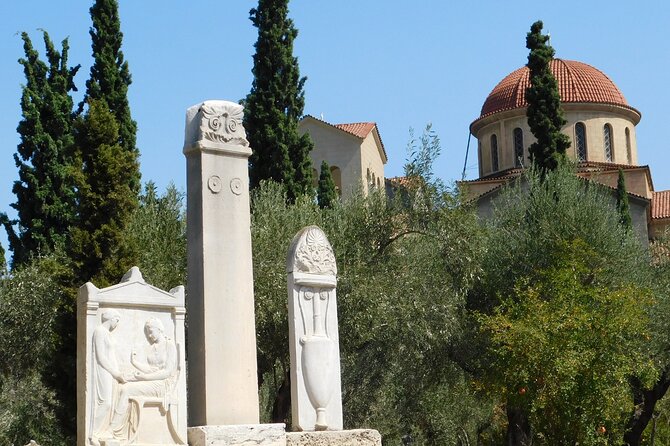
Many Athens excursions drive straight to a famous ancient site, give you an hour or two, and return you to the city. This one has a better organizing idea. The ancient Sacred Way was the pilgrimage road from Athens to Eleusis, where worshippers gathered for the Eleusinian Mysteries honoring Demeter and Persephone.
You are not walking the entire ancient road today. Modern streets, development, and traffic have replaced much of it. Still, the route lets you see how the journey unfolded. Kerameikos was the starting point near Athens. The road then crossed the Kifisos River, passed religious sites and Daphni Monastery, and continued toward the sanctuary at Eleusis.
That connection is the reason to choose this experience. The driver-guide can explain why a cemetery, a bridge, a monastery, and a sanctuary belong in the same story. The route also gives you a look at parts of western Athens that most first-time visitors skip.
More Private Luxury Tours in Athens
- Half Day Best Of Athens Highlights Luxury Private Tour 4Hou
★ 4.7 · 210 reviews - Private Luxury Biblical Tour: Apostle Paul in Athens & Corinth
★ 5.0 · 162 reviews - Athens AirPort To Athens Hotels Luxury Private Transfer Service
★ 4.5 · 161 reviews
Kerameikos: begin among tombs and city walls
The morning or early afternoon begins with pickup at your hotel or Athens port. You then head to Kerameikos, one of the most useful ancient sites for understanding Athens beyond its temples.
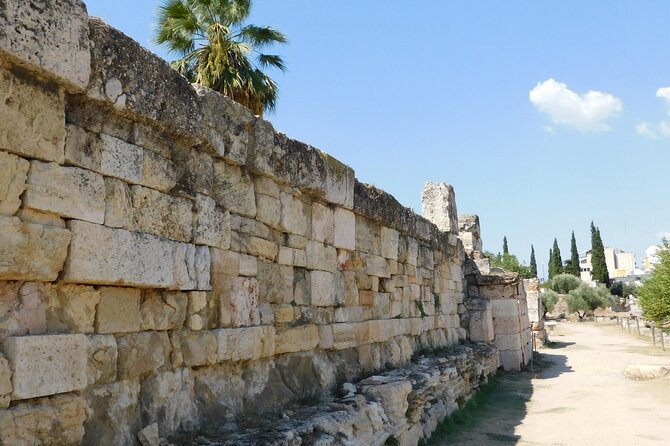
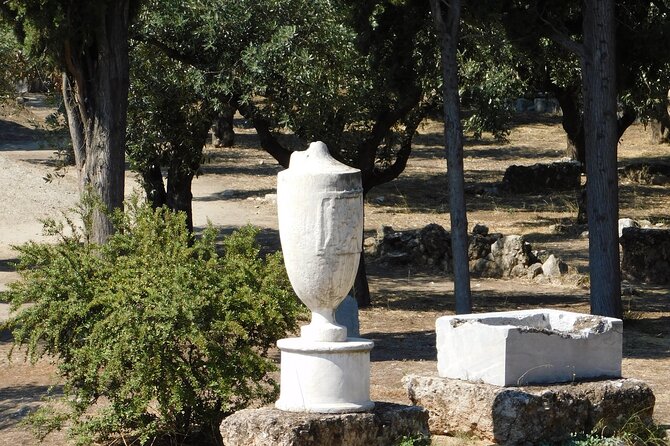
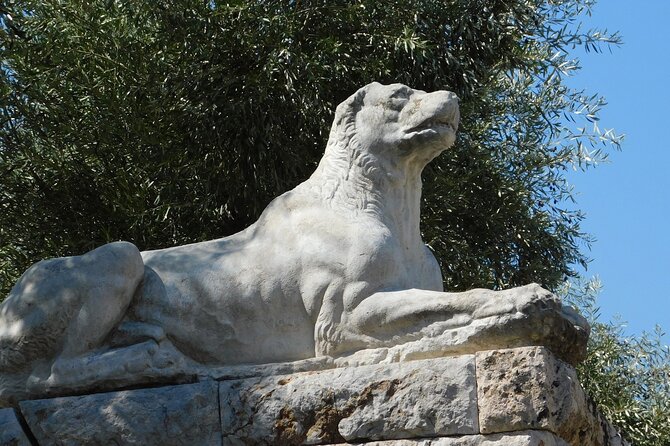
Kerameikos was the city’s potters’ quarter, but it also became Athens’ main cemetery. Its remains include funerary monuments, stretches of defensive wall, and the area around the Dipylon Gate. I like this opening because it introduces ordinary people, burial customs, city planning, and public ceremony before the day moves into sacred myth.
Allow about 30 minutes for the principal archaeological site, though that is a quick visit. You can see tomb markers and remains of the ancient walls, then connect the site to the Sacred Way. The Panathenaic procession also passed through this area on its route toward the Acropolis, so the site carries both funerary and civic importance.
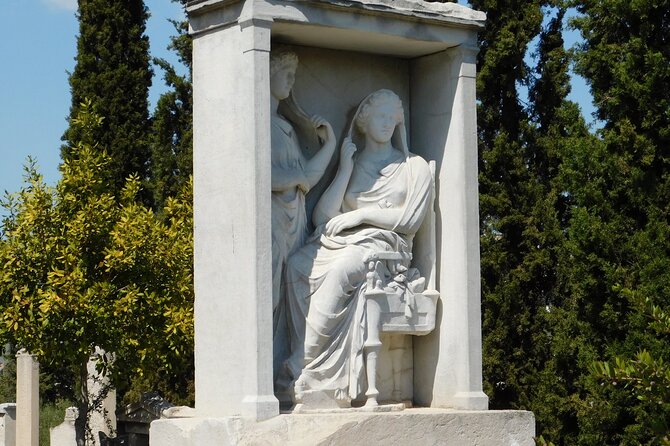
The Kerameikos Museum adds useful detail. Its pottery, grave goods, funerary stelae, and other finds help explain the people behind the ruins. Thirty minutes is enough for a focused look, but not for a slow museum visit. If you enjoy inscriptions, burial art, or ancient daily life, you may want to ask for extra time here and shorten one of the minor roadside stops.
Dipylon Gate and Pompeion: where ceremony met the city
The Dipylon Gate was the largest gateway into ancient Athens and the main entrance for people arriving along the Sacred Way. It also played a role in the Panathenaic Festival, when a major procession moved through the city toward the Acropolis.
The remains are not as immediately dramatic as the Acropolis gates, so the driver-guide’s explanation matters. You are looking at fragments, walls, tombs, and the shape of an old urban entrance. With the right context, you can picture merchants, pilgrims, officials, and funeral processions passing through the same point.
The nearby Pompeion was used for preparations connected with the Panathenaic Procession. The planned visit is only about ten minutes. Think of both the Dipylon and Pompeion as orientation stops rather than full sightseeing sessions. They help you understand the route, but you will not have time for a slow examination of every stone.
The Sacred Way through modern Athens
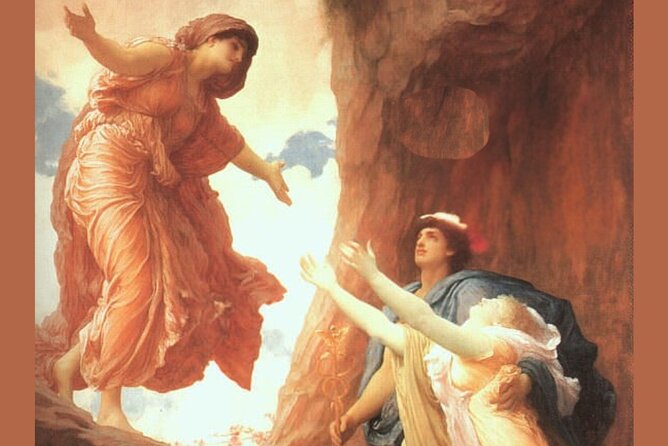
The next parts of the route are less polished than the major archaeological parks. That is part of their appeal. A section of the Iera Odos survives near the modern city, including remains associated with an ancient bridge over the Kifisos River.
The bridge had at least five arches, with three surviving piers discovered during construction near the Eleonas Metro Station. The stop takes around ten minutes and is free. It is a small site, but it helps you grasp the practical side of the pilgrimage. Ancient worshippers did not move through a museum display. They crossed rivers, followed roads, and traveled in large groups.
Another short stop in Aigaleo brings you close to the ancient Sacred Way. You may see only limited remains, and this is not a long walk on an intact Roman road. Still, it gives the route a physical thread. Ask the driver-guide to explain how the ancient road relates to the modern streets around you.
More Private Luxury Tours in Greece
- Private Luxury Biblical Tour: Apostle Paul’s Footsteps – Corinth
★ 5.0 · 148 reviews - Athens Private Luxury Catamaran Cruise with Traditional Greek Meal and BBQ
★ 5.0 · 106 reviews - Private Luxury Tour: Athens Acropolis & Iconic City Highlights
★ 5.0 · 48 reviews - Private Luxury Tour: Unveiling the Sacred Mysteries of Eleusis
★ 5.0 · 45 reviews
Daphni Monastery adds a Byzantine pause
The Monastery of Daphni is one of the strongest stops before Eleusis. Built in the 11th century, it is a UNESCO World Heritage Site known for Byzantine mosaics, especially the image of Christ Pantocrator in the dome.
The monastery also sits beside the ancient Sacred Way, so it adds another layer to the day. The route was pagan before it became part of a Christian setting, yet both traditions treated this corridor as sacred. You get a quiet change of mood after the traffic and scattered ruins of western Athens.
The planned visit lasts about 30 minutes and admission is listed as free. Wear sensible shoes and be prepared for the possibility that access or opening conditions may affect the visit. The supplied information specifically gives weekend access for the Sanctuary of Aphrodite, but it does not provide a separate opening schedule for Daphni.
The Sanctuary of Aphrodite and the old Roman bridge
Near Skaramagkas, the remains of a sanctuary dedicated to Aphrodite offer another brief connection to ancient religion. The site was associated with the Sacred Way and the route to Eleusis, though little remains today.
On weekends, you can enter and explore the ruins. On weekdays, the stop is from outside, mainly for photographs and a quick explanation. This difference matters. If you are hoping to walk through every ancient site, plan around the weekend access rather than assuming the interior will always be open.
Close to Eleusis, you also stop at a Roman bridge built during the reign of Hadrian around 125 CE. It is about 50 meters long and 5.30 meters wide, with four arches and sloping approaches. The bridge carried the road toward the Eleusinian sanctuary and crossed the Kephisos River.
This is another short visit, roughly ten minutes. You will not spend long studying Roman engineering, but the bridge is a useful physical reminder that the Sacred Way remained an important route long after the classical period.
Eleusis: the day’s central experience
Eleusis is where the tour’s separate threads come together. The sanctuary was devoted to Demeter and Persephone and hosted the Eleusinian Mysteries, among the most important religious rites of the ancient Greek world.
The mystery was not simply a story told to spectators. Initiates took part in ceremonies connected with loss, return, death, and renewal. The exact central rites were kept secret, which leaves visitors with a rare mix of evidence and uncertainty. You can see the spaces used by the cult, but no guide can fully recreate what initiates experienced.
The archaeological site includes gateways, sacred precincts, walls, temple remains, and the large Telesterion. The planned main visit is about 30 minutes, followed by several ten-minute stops within the site. That arrangement gives you a useful overview, but I would ask in advance how much time you can spend inside the sanctuary itself.
The Great Propylaea was the monumental entrance. Built in the second century CE under Marcus Aurelius, it echoed the design of the Propylaea on the Acropolis. Its purpose was more than practical. Passing through the gateway marked a move from the ordinary world into a sacred precinct.
The Kallichoron Well is linked to the story of Demeter, who rested there while searching for Persephone. Its name means well of the beautiful dances, and tradition connects it with women’s dancing. You are looking at a modest feature, but the myth gives it unusual emotional force.
The Ploutonion is associated with Hades, or Plouton, and the mythical entrance to the Underworld. This rocky cave area connects to the descent of Persephone and the central themes of the Eleusinian rites. It is a highlight for anyone who enjoys the meeting point of mythology and physical place.
The Telesterion was the great hall where initiation ceremonies took place. Today, its foundations and surrounding walls leave you to imagine the scale and secrecy of the rituals. This is the part of Eleusis where a good explanation makes a real difference. Pericles, Periklis, and Dimitris have been praised for turning the site into a story rather than a collection of fallen blocks.
The Eleusis Museum and lunch in town
The Archaeological Museum of Eleusis is essential if you want the sanctuary to make sense. Its objects include statues of Demeter and Persephone, reliefs, offerings, and finds from the sacred precinct.
Thirty minutes is the planned museum time. That is enough to see the main pieces, but not enough for a detailed study of every exhibit. Printed guides have also been used during the experience, which can help you keep track of the gods, buildings, and ritual terms.
After the ruins, you stop at a traditional taverna in Eleusis for about 45 minutes. Lunch is not included, so bring room in the budget. You might find grilled meat, salads, tzatziki, eggplant salad, and other familiar Greek dishes. The value here is not just the meal. Sitting in town gives the day a local finish instead of sending you straight back to Athens after the final ruin.
The timing is fairly tight. If you want a leisurely lunch, a long museum visit, and a slow walk through the sanctuary, you may need to arrange a longer private day or reduce the number of minor stops.
What the private vehicle adds
For groups of one to four, transport is by luxury sedan. Groups of five to seven use a minivan. Both options include air conditioning, bottled water, WiFi, and private transportation.
That comfort matters in warm weather. The route includes outdoor archaeological sites, roadside stops, and walking on uneven ground. You can cool off between visits instead of losing energy on public transport connections.
Pickup and drop-off are offered at Athens hotels and the cruise port. Airport pickup is available for an additional fee. The tour is private, so your group controls the conversation and can ask for more explanation at places that interest you.
The driver-guide is not the same as a licensed guide accompanying you into each archaeological site. This distinction is the most important thing to understand before booking. You receive historical explanations during the drive and at the stops, but entry tickets and an official site guide are not included.
Is $129 good value?
The advertised price is $129, with group discounts available. Since the tour is private, the value improves as your party gets larger. A group of four to seven can split the vehicle cost and enjoy door-to-door transport without organizing several taxis.
For one or two people, the price is harder to defend if you expect a full guided archaeological tour. You still pay entrance fees separately, and lunch is extra. The tour is strongest as a comfortable private route with historical commentary, not as an all-inclusive luxury package.
Budget for:
- Admission to Kerameikos and the Kerameikos Museum
- Admission to the archaeological site and museum at Eleusis
- Any other paid entry on the day
- Lunch in Eleusis
- Optional gratuity
- Extra airport pickup, if needed
Wear comfortable shoes. Bring a hat, sunscreen, and water, even though bottled water is supplied. Most people can participate, but the number of ruins and outdoor paths makes good footwear a sensible choice.
Who should book this Sacred Way tour?
I would choose this experience if you have already seen central Athens and want a more unusual ancient site. It suits people who enjoy mythology, religious history, ancient roads, and smaller archaeological remains that do not come with huge crowds.
It also works well for families or small groups who value a private vehicle and a flexible conversation. A strong driver-guide can make the difference, and the names most often praised are Pericles, also written Periklis, and Dimitris. Their humor, warmth, printed materials, and storytelling are repeatedly highlighted as major strengths.
I would be more cautious if you want long, detailed visits at every stop. The five to six hour schedule includes travel time and many short visits. You may feel rushed at Kerameikos or Eleusis, especially if you want to read museum labels or take careful photographs.
Free cancellation is available up to 24 hours before departure. Cancellations within 24 hours are not refunded, and poor weather can lead to a new date or a full refund.
Should you book it?
Book this tour if you want private transport and a connected story from Athens to Eleusis, with a driver-guide who can make the Sacred Way understandable and entertaining. The combination of Kerameikos, Daphni, old bridges, roadside sanctuaries, and Eleusis gives you a side of Greece that a standard Athens sightseeing day misses.
Skip it if you expect a licensed guide inside every monument or if you want to linger at each museum. For the right group, especially four to seven people, the comfort and personal attention make the $129 price easier to accept. For serious archaeology fans, ask for extra time at Eleusis before you confirm.
FAQ
How long does the private tour last?
The experience lasts approximately five to six hours, including the time spent traveling between locations.
Is pickup included?
Yes. Hotel and Athens cruise port pickup and drop-off are included. Airport pickup is available for an additional cost.
Are entrance fees included?
No. Admission fees for archaeological sites and museums are paid separately.
Is lunch included?
No. A lunch stop at a traditional taverna in Eleusis is scheduled, but the meal cost is your responsibility.
What type of vehicle is used?
Groups of one to four people travel in a luxury sedan. Groups of five to seven use a comfortable minivan. The vehicles include air conditioning, bottled water, and WiFi.
Is the tour led by a licensed guide?
The experience includes an English-speaking driver-guide with historical knowledge. A licensed guide to accompany you inside archaeological sites is not included.
Just added around Athens
- Discover Lefkes: Traditional Greek Village Paros VIP Experience★ 4.0 · 5 reviews
- Private Athens Transfer Airport/Port -Greek Tours-Hourly service★ 5.0 · 88 reviews
- VIP Private Guided Tour of Athens Acropolis & Plaka in a Sidecar★ 5.0 · 108 reviews
- Visit Delphi & Meteora Monasteries Luxury Private Tour FromAthens★ 5.0 · 9 reviews
- VIP – Day Cruise From Athens to Hydra Poros Aegina★ 4.5 · 28 reviews
- Private Luxury Transfers in Athens, Piraeus Port & Athens Airport★ 4.5 · 24 reviews
- Private Luxury Transfer from Athens to Athens Airport★ 5.0 · 25 reviews
- VIP Day Cruise from Athens to Hydra, Poros and Aegina★ 4.5 · 58 reviews
Private Luxury Tours, compared.


Arrival Transfer: Private Luxury 8 Passenger Limousine Service
Read our review →
Dubai 3 Hour Private Luxury Yacht Charter with Jet Ski Option
Read our review →
VIP Jazz Dinner Cruise with Private Tour and Open Bar Option
Read our review →
Four-Day Private Luxury Golden Triangle Tour to Agra and Jaipur From New Delhi
Read our review →

Browse the lists this tour appears in