
Review · LUXURY CAR & LIMOUSINE TOURS
Kyoto: Private Highlights Tour with Guide and Luxury Vehicle
Kyoto rewards a smart route. This private 10-hour tour links Arashiyama, the Golden Pavilion, Fushimi Inari, Gion, and several major temples without making you wrestle with city transport. I like the door-to-door pickup from Kyoto, Osaka, or Nara, and I like the freedom to adjust the day around your interests. The main catch is simple: this is a very full day, and you still walk quite a bit once the vehicle stops.
The $383 price covers a private group of up to six, which can be strong value for a family or small group. Guides such as Sam, Yash, Hashan, Malik, and Isuru have been praised for patience, route changes, photography, and clear explanations. Just remember that food and temple admission are extra, and fitting every stop into one day can leave you tired.
Key points at a glance
- A private van covers a huge amount of ground: The route connects western, northern, eastern, and southern Kyoto in one long day.
- Pickup is available beyond Kyoto: You can begin and end in Kyoto, Osaka, or Nara, a major convenience for day visitors.
- The itinerary can change: Your guide can adjust stops, timing, and lunch plans to suit your group.
- Expect real walking: The vehicle saves road time, but temple grounds, shrine paths, Gion lanes, and shopping streets require time on foot.
- The strongest value is for groups: At $383 for up to six people, the per-person price becomes much more appealing than separate private transport.
- This is a highlights day, not a slow temple study: You will see a lot, but you will not have hours at every place.
Why private transport helps in Kyoto
Kyoto’s major sights are spread across the city. Arashiyama is in the west, Kinkaku-ji is farther north, Kiyomizu-dera and Gion are in the east, and Fushimi Inari is well south of the center. Trying to connect all of them by public transport in one day means checking routes, changing trains or buses, and losing time at crowded stops.
Here, your driver-guide picks you up at your accommodation, hotel, Airbnb, or Kyoto Station. Pickup and drop-off are offered in Kyoto, Osaka, and Nara, so this can work especially well if Kyoto is only one day of a wider Japan trip.
The air-conditioned vehicle includes Wi-Fi, and the transport is private rather than shared. The word luxury is part of the product description, but the useful point is comfort and control: you have a dedicated vehicle, space for your group, and somewhere to sit between walking sections.
The vehicle cannot remove all the effort. A road-accessible drop-off does not put you at the inner gate of every temple. One particularly important warning concerns Kiyomizu-dera, Ninenzaka, Sannenzaka, and Gion. These areas involve slopes, stone lanes, stairs, or extended walking. A private car makes the day easier, but it does not turn Kyoto into a drive-through attraction.
More Luxury Car Tours in Japan
- Luxury van Ride to famous car meet up spot Daikoku
★ 4.5 · 148 reviews - Haneda Airport Private Transfer – Luxury Car & Meet & Greet
★ 4.5 · 68 reviews - Full Day Tokyo Private Tour by Luxury Vehicle
★ 5.0 · 41 reviews
Arashiyama begins the day with bamboo and hillside views
The western district of Arashiyama is a strong opening because it gives you several different Kyoto experiences in one area. You visit the bamboo grove, Tenryu-ji and its garden, Togetsu-kyo Bridge, Monkey Park Iwatayama, and the Kimono Forest.
The Sagano Bamboo Forest is the photo stop most people picture before arriving in Kyoto. Tall bamboo rises on both sides of the path, creating a cool, enclosed corridor. Your allotted time is about 40 minutes, enough for photographs and a short walk, but not enough for a leisurely exploration of every nearby lane.
Tenryu-ji adds a more traditional temple setting. Its garden is calmer than the bamboo path and gives you a chance to see how pond, rocks, trees, and borrowed views are arranged in a Zen setting. Your guide can explain the temple’s place in Kyoto’s religious and artistic story, though the amount of detail depends on the guide and the pace of your group.
Togetsu-kyo Bridge is a quick scenic stop rather than a major visit. Monkey Park Iwatayama is more demanding. It sits on a hillside, so reaching it involves an uphill walk. If your group includes young children, older adults, or anyone with limited stamina, ask your guide to help you decide how much of Arashiyama to cover.
The Kimono Forest, near Arashiyama’s railway area, offers a very different photo setting. Its pillars are wrapped in colorful kimono fabric patterns, making it a quick and cheerful stop between the natural scenery and the temples.
Families often find Arashiyama a good early section because there is variety. It is also where you should conserve energy. Spending too long here can squeeze the later stops, especially if traffic is heavy or you are starting from Osaka or Nara.
Kinkaku-ji gives you Kyoto’s famous golden image
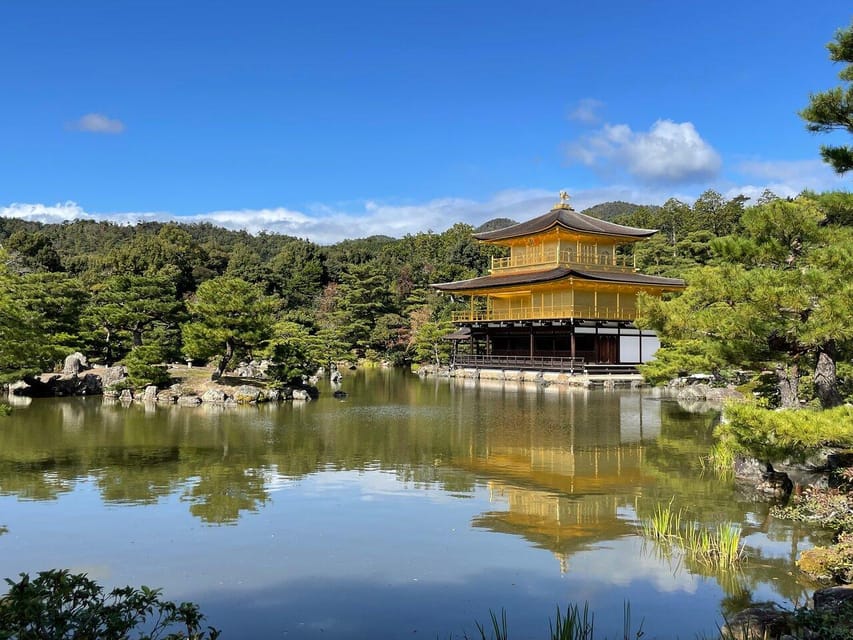
Kinkaku-ji, the Golden Pavilion, is one of Kyoto’s most recognizable sights. The gold-covered structure reflects in a pond surrounded by carefully arranged gardens. The view is striking even if you have seen it in dozens of photographs.
The visit is mainly about the approach, the pond, the pavilion, and the garden route. It is not a place where you wander freely through every room of the building. Your guide can add context about Zen Buddhism, the pavilion’s design, and the way the site presents architecture against water and trees.
This is a good place to keep your camera ready, but do not rush past the garden path. The pavilion gets the attention, while the surrounding details make the stop feel like a temple visit rather than a single photo opportunity.
Admission is not included, so bring cash. The tour information also notes that some temple entrances do not accept cards. The experience includes skip-the-ticket-line access, but you still need to pay your own entrance fees.
Fushimi Inari brings torii gates and a longer walk
Fushimi Inari Taisha is known for its thousands of orange-red torii gates, which form tunnels up the wooded mountain. It is one of Kyoto’s most memorable religious sites, but it is also one of the places where visitors often underestimate the walking.
You do not need to climb the entire mountain to appreciate Fushimi Inari. The lower shrine area and the first torii paths provide the classic views. If you want to walk farther, tell your guide how much time and energy you have. The private format helps here because your guide can adjust the stop rather than forcing everyone into one fixed route.
The shrine’s visual rhythm is powerful: gate after gate, with smaller shrines and stone fox figures along the way. Foxes are associated with Inari, the Shinto deity connected with rice and prosperity. A guide can help you notice these details instead of treating the shrine as only a photography stop.
Fushimi Inari is often best handled with clear expectations. You can see the main area in an hour, but you cannot experience every mountain path in that time. Comfortable shoes are essential.
Same place, a different kind of splurge:
- Tokyo:Luxury Sumo Show Experience & Japanese cuisine & Drink
★ 4.7 · 577 reviews - From Tokyo: Mt Fuji Private Day Tour In Luxury Land Cruiser
★ 4.9 · 168 reviews - From Tokyo/Nagano: Luxury Snow Monkey Private Full-Day Tour
★ 4.9 · 82 reviews - Tokyo: WARP SHINJUKU Nightclub Ticket with Drink / VIP Plan
★ 4.2 · 55 reviews
Kyoto’s eastern temples require time on foot
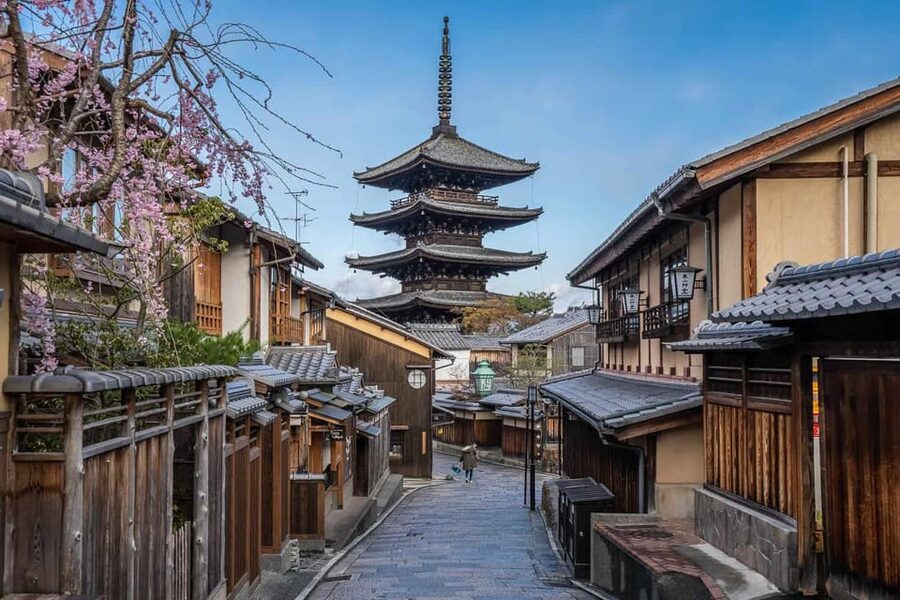
The eastern part of the day brings together Kiyomizu-dera, the old lanes of Ninenzaka and Sannenzaka, Gion, and possibly Ginkaku-ji and Sanjusangen-do. This is where the tour feels most like an old walking city rather than a string of isolated attractions.
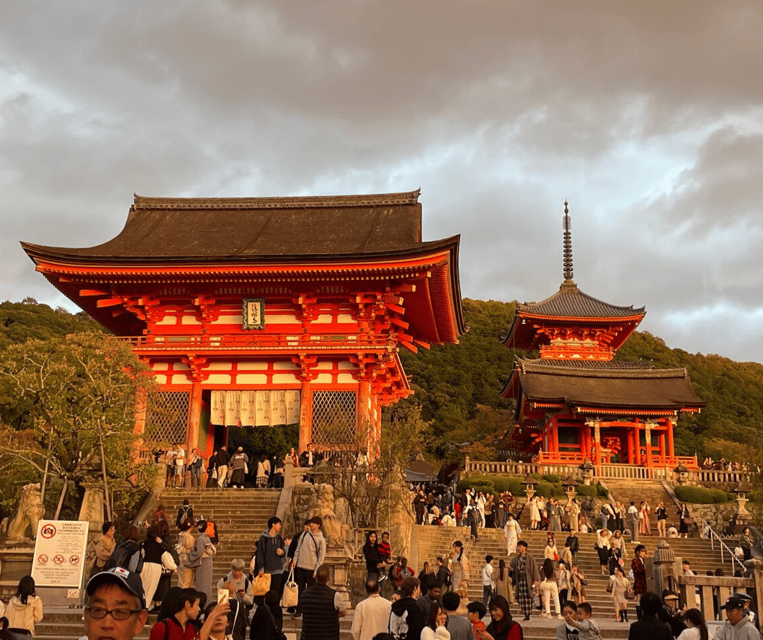
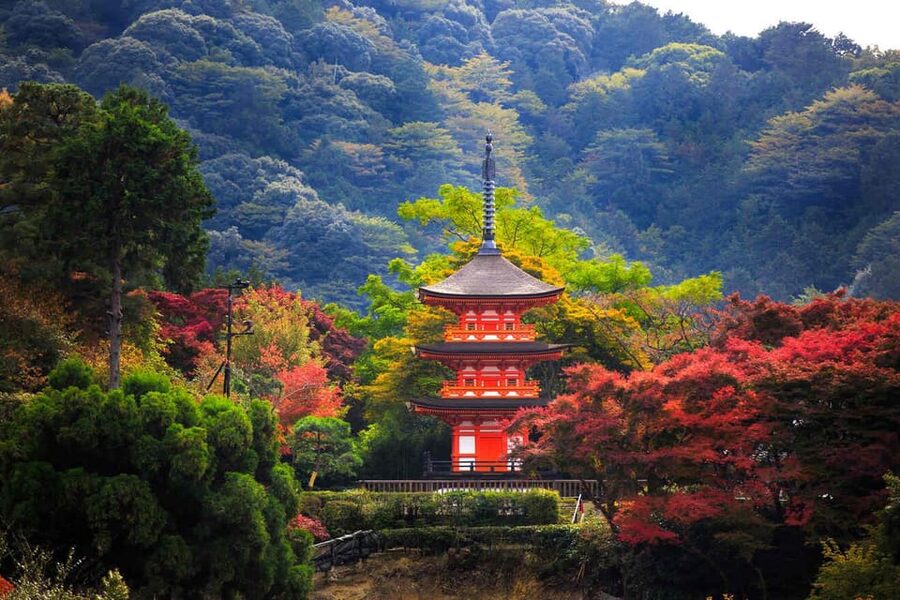
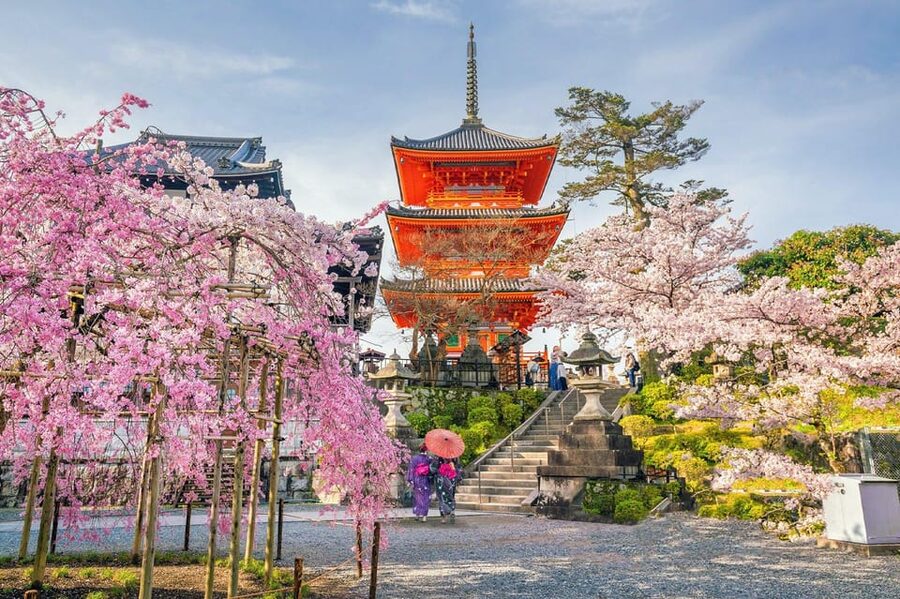
Kiyomizu-dera is famous for its wooden stage, which projects from the hillside and opens to broad views over Kyoto. The temple complex includes several areas to explore, and the approach is lined with shops and tea houses. Expect crowds and uneven surfaces, particularly around the popular approach streets.
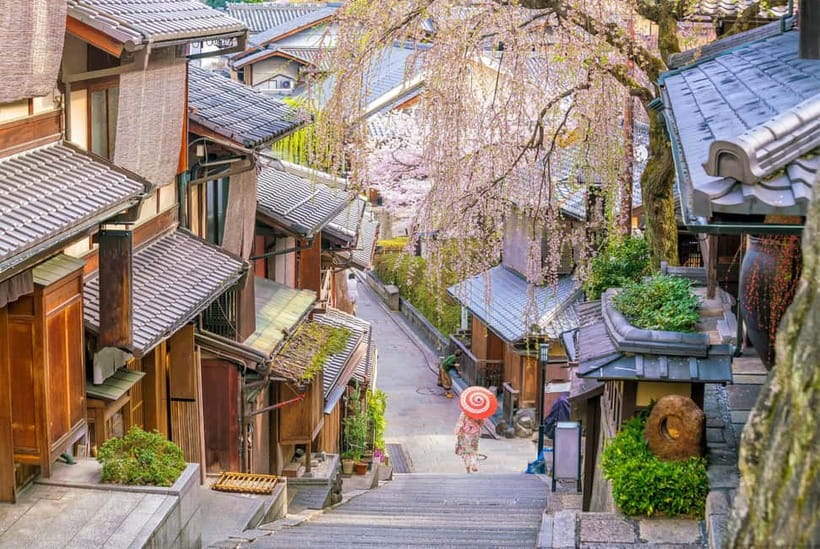
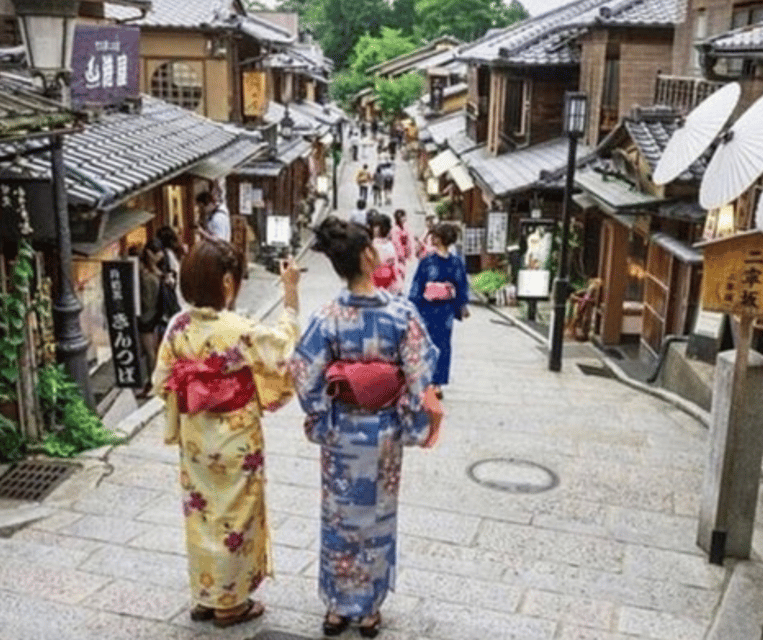
Ninenzaka and Sannenzaka are among the most atmospheric lanes in the tour. Traditional-style buildings, small shops, sweets, ceramics, and tea-related goods make this a pleasant place to slow down. It is also easy to spend more time here than planned, so agree with your guide on a meeting point and schedule.
Sanjusangen-do offers a change of mood. Its long wooden hall is known for rows of Buddhist statues, making it a more interior, contemplative visit than the open views at Kiyomizu-dera. Since the tour allows about an hour at each listed stop, your guide can help decide if this fits your priorities.
Ginkaku-ji, the Silver Pavilion, is another Zen temple with a carefully designed garden. Despite its name, it is not covered in silver. The garden, sand forms, moss, and hillside setting are the real reason to visit. Including both Kinkaku-ji and Ginkaku-ji lets you compare Kyoto’s famous gold pavilion with a quieter and more restrained temple setting.
The practical issue is distance and stamina. The eastern stops are rewarding, but they come after Arashiyama, Kinkaku-ji, and possibly Fushimi Inari. If your knees or feet are already complaining, ask to remove a stop rather than trying to collect every site.
Gion and Nishiki Market add everyday Kyoto
Gion is Kyoto’s best-known traditional entertainment district, with narrow streets, wooden teahouses, and a long connection to geisha culture. You may see maiko or geiko, but sightings are not guaranteed, and you should treat anyone you encounter with respect. The district is most enjoyable when you look beyond the search for a photograph and notice the architecture, lanterns, entrances, and quiet side streets.
Nishiki Market is the food-focused part of the day. Its covered lanes offer local specialties, snacks, pickles, sweets, seafood, and other ingredients, along with restaurants and international choices. Lunch is flexible: you can choose a restaurant or eat at Nishiki Market.
That flexibility matters for families and groups with different diets. One guide, Yash, helped arrange a vegan restaurant, and another guide, Ali, called ahead to make a restaurant reservation when language made that difficult. These examples suggest why having a guide can be useful beyond sightseeing. Still, food and drinks are not included, so budget separately.
Do not expect a leisurely market crawl if you are trying to complete the full route. Nishiki can easily become an hour of tasting and browsing. That is not a problem if food is a priority, but you may need to shorten another stop.
The guides are the heart of the experience
The most consistent strength is the human service. Guides named Sam, Yash, Hashan, Malik, Isuru, Sunny, Ali, and others have been praised for punctual pickup, safe driving, clear communication, patience with children, and willingness to change the route.
Several guides also helped with photographs. Hashan, Malik, Ravindu, and others were specifically praised for finding good photo spots or taking pictures for the group. That can be a real benefit when you want family photos rather than another set of selfies.
The guide role may vary. Some guides provide extensive explanations at each site, while others combine short background talks with directions and efficient transport. One guest described the driver-guide service as brief background information rather than a formal lecture. If detailed religious or architectural interpretation is your top priority, clarify what style of guiding you want when booking.
English, Japanese, Hindi, and Urdu are listed as available languages. Individual language ability can vary by guide, but the service is designed for international visitors.
The flexible style is especially useful during busy periods. Guides have adjusted routes around New Year crowds, spring blossom traffic, rain, snow, and tired children. That does not defeat Kyoto’s crowds, but it can save you from standing at the wrong bus stop while the clock runs away.
Is $383 good value for up to six people?
For one person, $383 is a serious price. For six people, it works out to roughly $64 per person before admissions and meals. For four people, it is about $96 each, and for a family that wants private transport, the cost can make good sense.
The value comes from time and coordination rather than included extras. You get hotel pickup and drop-off, a private air-conditioned vehicle, an English-speaking guide, Wi-Fi, and a route that would be difficult to organize by taxi alone. Meals, drinks, and admission tickets are extra, and the vehicle does not eliminate walking.
I would rate the value highest for:
- Families with children who need regular vehicle breaks
- Small groups arriving from Osaka or Nara
- First-time visitors with only one Kyoto day
- Groups that want to choose between temples, food, shopping, and photographs
- People who prefer a private vehicle to buses and trains
I would be more cautious if you prefer slow travel. Kyoto rewards lingering, and this schedule asks you to cover a great deal. A two-day plan would give you more time at each temple and less pressure on your feet.
Practical advice for making the day work
Wear shoes you can walk in for many hours. This is not a decorative footwear day.
Bring cash for temple admission and small purchases. Some entrances do not accept cards, and market snacks or small shop purchases may also be easier with cash.
Bring an umbrella if rain is possible. The tour runs in wet weather, and several stops are outdoors.
Plan a proper lunch and short drink breaks. One family found the flexible schedule useful with tired children, while another person with walking limitations found the full day exhausting. Both experiences point to the same advice: tell your guide early when you need a pause.
If you are starting in Osaka or Nara, remember that the day includes the drive into Kyoto and the return trip. The private vehicle makes this practical, but it also means the sightseeing portion must run to a firm schedule.
The tour is wheelchair accessible according to the activity details, but accessibility is not the same as effortless movement. Temple approaches, slopes, historic lanes, and shrine paths can still present challenges. Discuss your specific mobility needs in advance.
Cancellation is free up to 24 hours before the start, and you can reserve now and pay later. Those terms help if your Japan schedule is still shifting.
Should you book this Kyoto highlights tour?
Book it if you have one day, a group of up to six, and a strong wish to see Kyoto’s major sights without managing the transport yourself. The pickup from Osaka or Nara is a major advantage, and the guides’ patience, safe driving, photography help, and route flexibility add real value.
Do not book it expecting a relaxed, scholarly visit to every temple. The schedule is ambitious, the admissions and food cost extra, and you will walk more than the luxury vehicle might suggest.
My practical choice would be to decide on three must-see areas before the morning begins. Keep Arashiyama, Kinkaku-ji, and Fushimi Inari if this is your first visit, then use the remaining time for Kiyomizu-dera, Gion, Nishiki, or the additional temples. That approach gives you a full day without turning Kyoto into a checklist marathon.
FAQ
How long is the private Kyoto tour?
The tour lasts 10 hours. Starting times depend on availability.
How many people can join the private group?
The price is for a group of up to six people.
Where can pickup and drop-off take place?
Pickup and drop-off are available in Kyoto, Osaka, and Nara. The service can also collect you from accommodation, a hotel, an Airbnb, or Kyoto Station, as shown by the booking examples.
Is transportation included?
Yes. The tour includes private transportation in an air-conditioned vehicle, along with Wi-Fi on board.
Is a guide included?
Yes. An English-speaking guide is included. Live guiding is also listed in Japanese, Hindi, and Urdu.
Are food and temple admission included?
No. Food, drinks, and entry tickets are not included. Bring cash because some temple entrances may not accept cards.
Can the itinerary be changed?
Yes. You can customize the route according to your interests, and the guide can adjust timing or add other sites if time permits.
Is the tour suitable for wheelchair users?
The activity is listed as wheelchair accessible. However, temple grounds, shrine paths, slopes, and historic streets can require substantial walking, so discuss your specific needs before the tour.
What should you bring?
Wear comfortable shoes. If rain is possible, bring an umbrella, and carry some cash for admission tickets and purchases.
Just added around Japan
- Chef’s Choice Sushi and Tempura Luxury Foodie Tour in Ginza★ 5.0 · 35 reviews
- Luxury Kimono Photoshoot at Ginza Tokyo★ 5.0 · 7 reviews
- Tokyo Private Tour English Pro Guide By Luxury Vehicle★ 4.7 · 6 reviews
- Tokyo:Luxury Private Tour with English-Speaking driver★ 5.0 · 7 reviews
- Tokyo: Luxury Nikko Private 1 Day Tour Low Price Guaranteed★ 5.0 · 13 reviews
- Tokyo: Private Makeover Photography Studio in Luxury Kimono★ 5.0 · 22 reviews
- Tokyo: Private Nikko Sightseeing Tour In Luxury Land Cruiser★ 4.1 · 8 reviews
- Osaka Dotonbori:GIRAFFE Nightclub Ticket with Drink/VIP Plan★ 4.4 · 14 reviews
Luxury Car & Limousine Tours, compared.

Cu Chi Tunnels & Mekong Delta Tour with VIP Limousine Transfer
Read our review →
Arrival Transfer: Private Luxury 8 Passenger Limousine Service
Read our review →
HCMC: Cu Chi Tunnels & Mekong Delta VIP Tour by Limousine
Read our review →
Skip The Bus: San Francisco By Luxury Van Tour
Read our review →
Road to Hana Luxury Limo-Van Tour with Helicopter Flight
Read our review →
City Tour with Professional Guide in Luxury Car
Read our review →
Private Arrival Transfer: From LAS Airport by SUV or Luxury Limo
Read our review →Browse the lists this tour appears in