
Review · FRANCE LUXURY TOURS
Luxury Tour of Château de La Dauphine
Royal history meets working wine country. The Luxury Tour of Château de La Dauphine gives you a compact look at an 18th-century château, a 66-hectare organic and biodynamic vineyard, and the modern buildings where two estate wines are made. I especially like the mix of elegant architecture and practical winemaking, plus the tasting of three estate wines at the end.
The tour also earns points for its guides. Gaspard has been praised for explaining vineyard soils clearly, while Carissa has led engaging tours in excellent English. The main consideration is time: at roughly one to one and a half hours, this is a focused estate visit, not a full-day wine program. The non-refundable booking policy also means you should be sure of your plans before paying.
Key points at a glance
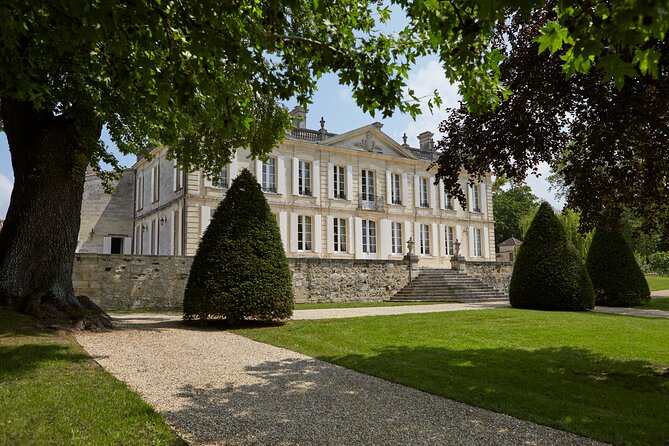
- A royal connection: The château takes its name from Marie-Josèphe de Saxe, Dauphine of France and mother of Louis XVI, who stayed at the estate.
- A full estate visit: You see the park, château interiors, vineyards, and production buildings in one compact tour.
- Organic and biodynamic farming: The estate works plot by plot across its 66 hectares, with a clear focus on environmental methods.
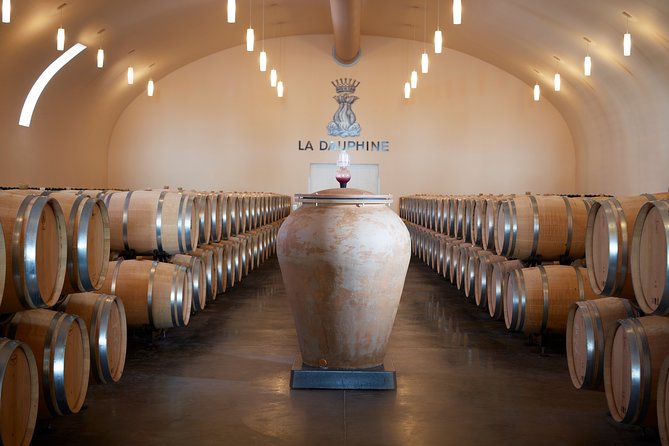
- Modern wine production: The technical buildings include distinctive cellar spaces with tanks arranged in a dome-like layout.
- Three wines to taste: The tasting introduces Château de La Dauphine and Delphis de La Dauphine, along with other estate selections.
- Good value at $17: For the current listed price, the combination of heritage, vineyard access, production tour, and tasting is strong.
Why Château de La Dauphine is worth your time
Fronsac sits near the Dordogne, in an old wine area linked to Cardinal Richelieu and his grand-nephew. In earlier centuries, Fronsac wine held a very high place at the French court. You do not need to be a wine expert to enjoy that backstory, but it gives the visit more weight than a simple cellar tasting.
The château’s name connects the property to Marie-Josèphe de Saxe, the Dauphine of France who stayed here. She was the mother of several future French kings, including Louis XVI. That royal link is not treated as a dusty footnote. It helps explain why the house matters and gives the first part of the tour a sense of place.
I like that the experience joins the old and the new. You begin with the 18th-century château and park, then move toward the vineyards and the modern technical buildings. You are not just shown a pretty manor house, and you are not confined to a production hall. You get a short, well-rounded picture of how the estate’s past and present fit together.
The estate covers 66 hectares and follows organic and biodynamic methods. Its stated approach is practical: decisions are made parcel by parcel rather than treating every part of the property in exactly the same way. That gives your guide something useful to explain. You can ask how soil, vines, and farming choices affect the finished wine instead of hearing only broad claims about sustainability.
A few more luxury tours around France worth a look
- Nice: Orange Bar Crawl with 5 Free Shots & VIP Club Entry
★ 4.6 · 959 reviews - Nice: Ultimate Party Bar Crawl Free Shots & VIP Club Entry
★ 4.3 · 628 reviews - Seine River Dinner Cruise with Live Singer by VIP Yacht de Paris
★ 4.0 · 604 reviews
Walking through the château and park
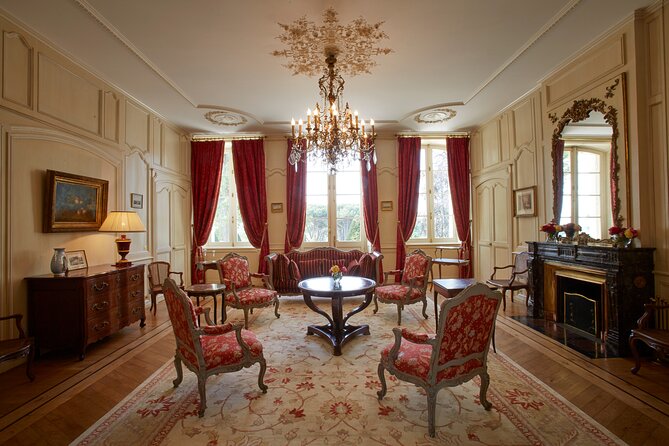
The visit begins with the park and the interior of the château. This part is likely to appeal most to anyone who enjoys architecture, French history, or the atmosphere of an old country estate. The building is not simply a backdrop for the wine. Its rooms connect the estate to the period when Marie-Josèphe de Saxe stayed here.
Expect the château portion to focus on the property’s heritage rather than a large museum collection. The information available describes a visit to the interior and the grounds, but it does not promise a room-by-room historical exhibition. That distinction matters. You are coming for a combination of place, wine, and production, not a major palace tour.
The setting also gives you a good opening to the vineyard story. The vines reach close to the château, which helps you see the connection between the house and the land. You are not being driven far away to a separate field. The working vineyard is part of the estate you are visiting.
A proposal has even taken place on the grounds, which says something about the atmosphere. If you are planning a special occasion, the château and park may provide a memorable setting, but the tour itself is not advertised as a proposal package. For that reason, any special arrangement should be confirmed directly with the estate before booking.
Understanding the 66-hectare biodynamic vineyard
The vineyard section is one of the more useful parts of the experience because the estate explains its environmental philosophy as part of the visit. Château de La Dauphine describes its 66 hectares as BIO and BIODYAMIE, referring to organic and biodynamic farming. The guide can connect those methods to the actual work of the property.
Biodynamics can sound vague if it is presented only as a label. Here, the stated plot-by-plot approach gives the subject a practical angle. You can learn why different sections may receive different attention and how vineyard decisions are made according to the character of each parcel.
This is especially helpful if you are new to Bordeaux wine. You do not need to arrive knowing the details of Fronsac soils or cellar management. Guides such as Gaspard have been praised for explaining vineyard soil in clear terms, while Pascal’s visit was noted for its straightforward explanation of biodynamics.
I would pay close attention here, because the vineyard walk helps you understand the tasting later. Wine can seem mysterious when you only see a finished bottle. Looking at the land and hearing how the estate farms it gives you a reason to compare the wines with more care.
The information provided does not promise a long walk through every vineyard parcel. The full tour lasts about one hour to one hour and thirty minutes, so the outdoor section is part of a broader route. Wear shoes that are comfortable for walking around an estate, and plan for the possibility of uneven outdoor surfaces.
The modern cellars and technical buildings
The production area adds a welcome change of pace. After the château and vines, you move through the technical buildings where the estate makes Château de La Dauphine and Delphis de La Dauphine.
This is where the tour becomes especially useful for anyone curious about winemaking. The buildings combine traditional wine production with newer technology. One memorable feature is the arrangement of the tanks in a dome-like or cupola layout. It is an unusual visual detail, and it gives the cellar a stronger sense of design than a standard row of tanks.
You can also learn about the different barrels and how they fit into the process. Gaspard has been praised for explaining the vats and barrels in a friendly, understandable way. That kind of guidance matters because a cellar can otherwise become a room full of equipment with little meaning.
The production visit does not appear to be a technical course in winemaking. Instead, it gives you enough context to understand the basic path from vineyard to bottle. That suits the length of the tour. You get useful detail without losing the pace of the visit.
I like this section because it prevents the château tour from becoming too decorative. The estate is clearly a working winery. You see the elegant side of La Dauphine, but you also see the machinery, tanks, barrels, and decisions that turn grapes into wine.
Same place, a different kind of splurge:
- Nice: Pub Crawl Yellow – Social Bars, Games & VIP Club Entry
★ 5.0 · 326 reviews - Riviera Bar Crawl Party with Free Shots and VIP Entry
★ 4.5 · 323 reviews - Versailles: Entry ticket & Private Apartments VIP Tour
★ 4.4 · 298 reviews - Catacombs of Paris Semi-Private VIP Restricted Access Tour
★ 5.0 · 288 reviews
Tasting three wines from the estate
The tasting closes the experience, with three wines from the property. The wines include the estate’s two principal labels, Château de La Dauphine and Delphis de La Dauphine, though the precise selection may vary.
The tasting takes place in the château shop area. That is convenient if you want to ask about bottles or consider buying wine after the tour. The purpose is not simply to give you something to drink at the end. It lets you test the ideas discussed during the vineyard and cellar portions.
Try to compare rather than rush. Note how each wine smells and feels, then think back to the estate’s farming and production choices. You may also want to ask which bottle is best suited to your taste or to a meal you have in mind.
The wines have received strong praise, and one English-language visit led to an intention to order them through a distributor in the United States. That does not mean every bottle will suit every palate. It does suggest that the tasting is treated seriously, rather than as an afterthought.
Families can also take part in the broader estate visit. One account describes a group visiting with children, with a patient and clear guide. Children may not care much about barrel types or biodynamic farming, but the château grounds and working cellar can give the visit enough variety to hold their attention for the short duration.
How the $17 price compares
At the current listed price of $17, the tour offers good value for a Bordeaux-area wine visit. You receive access to the park and château interior, an explanation of the vineyard and its farming methods, a look at the technical buildings, and three wines to taste.
Many wine experiences charge mainly for the tasting. Here, the tasting is only one part of the program. The heritage setting and production visit make the price easier to justify, particularly if you have limited time in the Fronsac area.
An older German-language comment referred to a price of 7 euros, but that is not the current listed amount. Use the present price of $17 when judging value, since prices can change.
The word luxury may suggest a long private tour, a meal, or a lavish wine pairing. Those extras are not part of the stated experience. This is better understood as a polished estate tour with a premium name, not an all-day luxury package.
A separate visit included lunch inside the château and a bottle of rosé when poor weather made a garden lunch unsuitable. That sounds like a pleasant arrangement, but lunch and rosé are not listed as standard inclusions here. Do not book this tour expecting them.
Timing, languages, and practical planning
The published opening period runs from November 1, 2024 through October 31, 2025, with visits available Monday through Sunday from 9:30 a.m. to 3:30 p.m. Your selected time should fit within that window.
The experience lasts about one to one and a half hours. That makes it easy to add to a day in Fronsac, but you should allow extra time if you plan to browse the shop or buy bottles afterward.
English and Spanish tours have taken place, and French is naturally part of the estate’s setting. Carissa has been praised for leading a tour in clear English, while a Spanish-language visit covered the château, vineyards, facilities, and tasting. Language availability can depend on the day and the guide, so check when booking if language matters to you.
You receive a mobile ticket, which keeps arrival simple. Confirmation is sent within 48 hours, subject to availability. The experience is listed as suitable for most people, but the route includes outdoor areas and working winery buildings, so anyone with specific mobility concerns should confirm details with the provider.
The booking is non-refundable and cannot be changed for any reason. That is the biggest practical drawback. I would avoid booking too early if your Bordeaux schedule is still uncertain.
Who will enjoy this estate tour most?
I would recommend Château de La Dauphine to you if you want several parts of Bordeaux wine culture in one short visit. It suits:
- First-time wine visitors who want clear explanations without a full technical course
- Couples looking for a beautiful historic setting
- Wine students interested in soils, biodynamic farming, tanks, and barrels
- Visitors staying near Bordeaux who want to explore Fronsac
- Families who prefer a shorter visit with changing scenery
- Anyone who values the story behind a bottle as much as the tasting itself
It may be less suitable if you want a long private tasting, a full meal, or an entire day spent among vineyards. The tour is carefully packed into roughly 60 to 90 minutes. That is a strength for a busy itinerary, but a limitation if you prefer slow, extended wine visits.
Should you book the Luxury Tour of Château de La Dauphine?
Book it if you want heritage, vineyard, cellar, and tasting in one compact experience. The royal connection gives the visit character, the biodynamic farming adds substance, and the modern production buildings keep it from feeling like a simple château photo stop.
The $17 price is fair for the current program, especially with three wines included. I would book with confidence if your schedule is fixed and you are interested in Fronsac wine, but I would not choose it if you need flexible cancellation or expect a long luxury lunch experience.
For a short and varied introduction to Château de La Dauphine, this is an easy choice. Just arrive ready to listen, taste, and pay attention to the details that connect the vineyard soil to the bottle.
FAQ
Where is Château de La Dauphine?
Château de La Dauphine is in France’s Fronsac wine region, in the Dordogne area.
How long does the tour last?
The experience lasts approximately one hour to one hour and thirty minutes.
What does the tour include?
It includes the park, the interior of the 18th-century château, the vineyard, an explanation of the estate’s environmental philosophy, the technical buildings, and a tasting of three estate wines.
Which wines are produced at the estate?
The estate produces Château de La Dauphine and Delphis de La Dauphine.
How many wines do you taste?
The tour includes a tasting of three wines from the estate.
Is the tour offered in English?
English-language tours have taken place, including tours led by Carissa. Language availability may depend on the date and guide, so confirm it when booking.
Is the tour available in Spanish?
A Spanish-language version has taken place and included the château, facilities, vineyards, and tasting. Confirm Spanish availability for your chosen date.
When is the château open for this experience?
The listed opening period is November 1, 2024 through October 31, 2025, Monday through Sunday from 9:30 a.m. to 3:30 p.m.
Can the booking be cancelled or changed?
No. The experience is non-refundable and cannot be changed for any reason after booking.
Just added around France
- Maison Noilly Prat VIP tour, wine and vermouth tastings★ 4.5 · 134 reviews
- A day in Saint-Emilion in a small group (Electric Luxury Van)★ 5.0 · 9 reviews
- Private luxury tour of Bordeaux in a magnificent Citroen DS – 2 hours★ 5.0 · 6 reviews
- Luxury Luxury Wine Tour Experience★ 5.0 · 69 reviews
- WW2 VIP landing beaches tour – half day★ 5.0 · 6 reviews
- Safari 4×4 in Camargue / VIP Tour 3h30 / Grau du Roi★ 4.6 · 52 reviews
- Lyon: Riviera Bar Crawl Party with Free Shots and Vip Entry★ 4.6 · 7 reviews
- Private Champagne Ruinart, Moet Chandon VIP Tour by Mercedes★ 4.7 · 6 reviews
France Luxury Tours, compared.
Orange Bar Crawl with 5 Free Shots & VIP Club Entry
Read our review →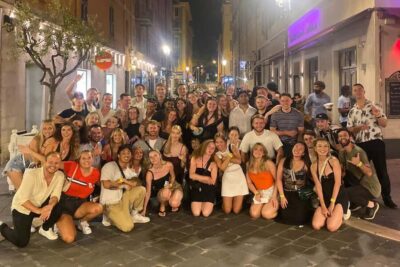
Ultimate Party Bar Crawl Free Shots & VIP Club Entry
Read our review →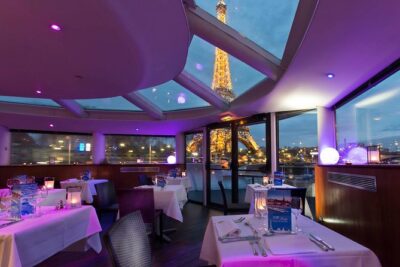
Seine River Dinner Cruise with Live Singer by VIP Yacht de Paris
Read our review →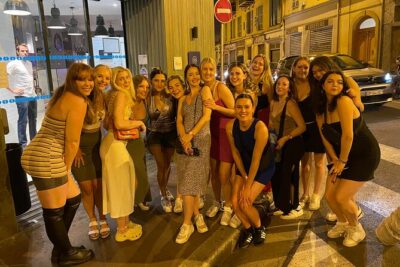
Pub Crawl Yellow – Social Bars, Games & VIP Club Entry
Read our review →
Riviera Bar Crawl Party with Free Shots and VIP Entry
Read our review →
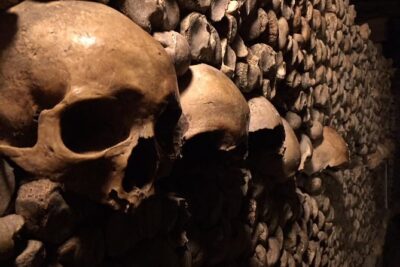
Catacombs of Paris Semi-Private VIP Restricted Access Tour
Read our review →
Browse the lists this tour appears in